Restaurant Roofing in Idaho Falls, ID Serving Idaho Falls & Eastern Idaho

Plan restaurant roof repairs in Idaho Falls around kitchen exhausts, dining areas, drainage, and the access needed to keep service coordinated.

Restaurant Roofing in Idaho Falls, ID

Restaurant Roofing

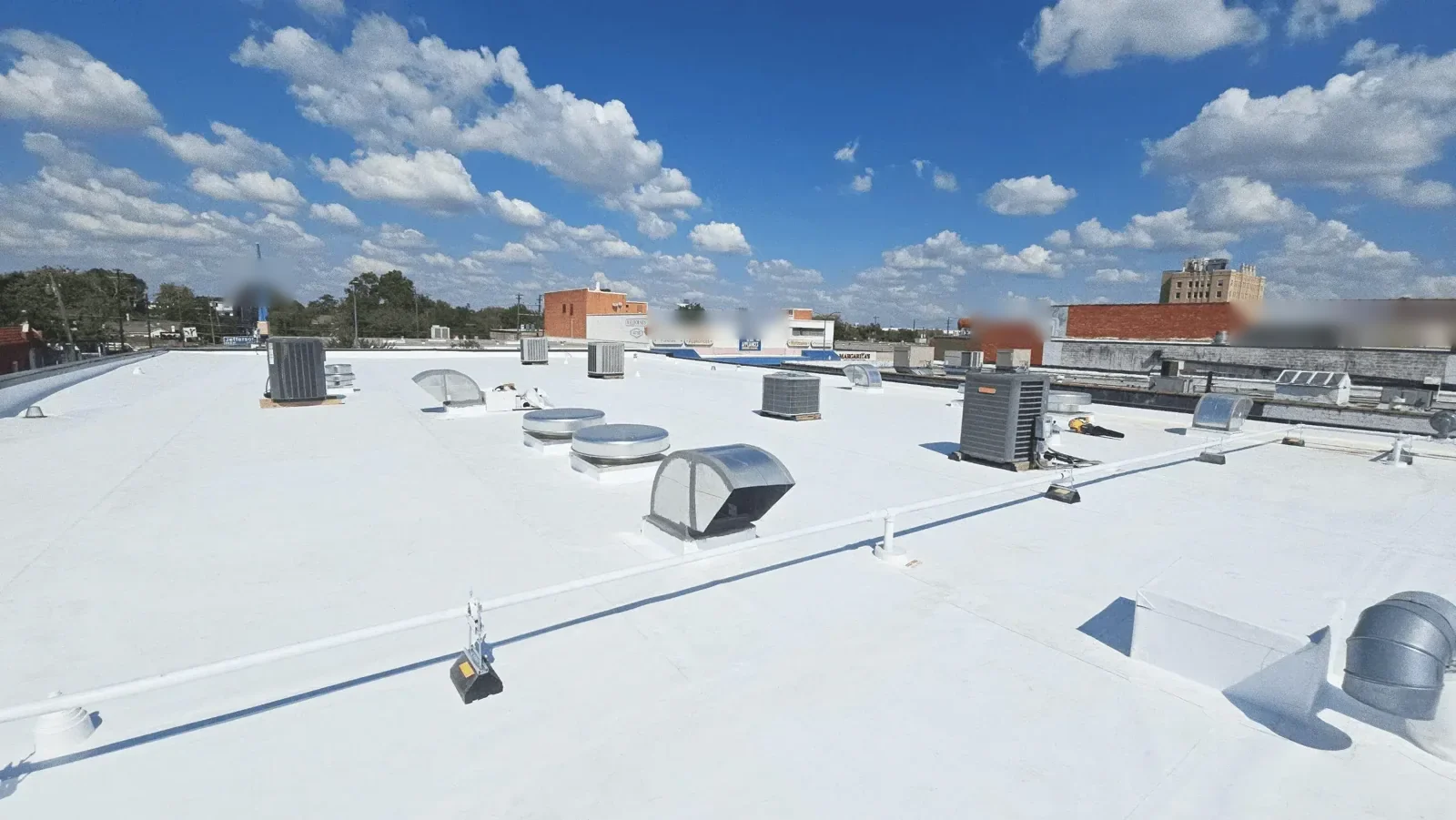
Restaurant roof work in Idaho Falls needs to account for cold-season exposure and a warm summer roof period, especially around exhausts, drains, and service curbs. Idaho Falls has a long freezing season, so restaurant roofs need drainage and flashing checks before and after winter. We inspect the assembly and the roof details around kitchen equipment, then set a work area that can be secured within the planned shift.

Idaho Falls is a regional center for restaurant, retail, travel, and business activity. Snake River Landing combines dining and event venues with offices and homes; Downtown Idaho Falls and South Downtown Idaho Falls form an integrated city core. Those broad commercial settings can involve different access and scheduling needs. A particular restaurant's kitchen hours, loading area, roof system, and tenant arrangement must be confirmed on site.

A leak above a dining room may begin at a curb, seam, drain, or penetration elsewhere. We trace the likely path and identify affected insulation or deck. The scope separates temporary water control from permanent correction.
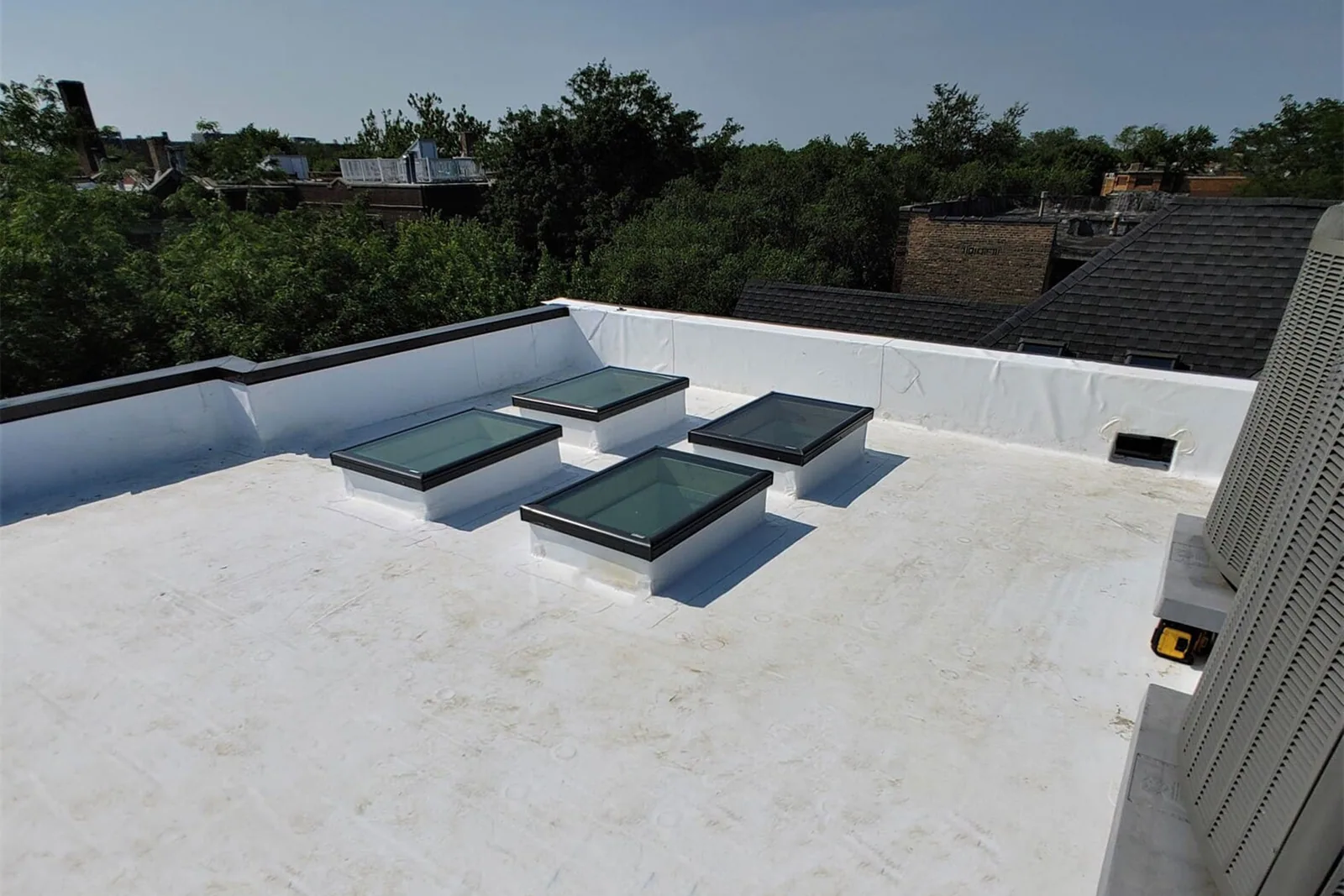
Restaurant Roofing in Idaho Falls, ID

Inspect Exhausts and Roof Transitions

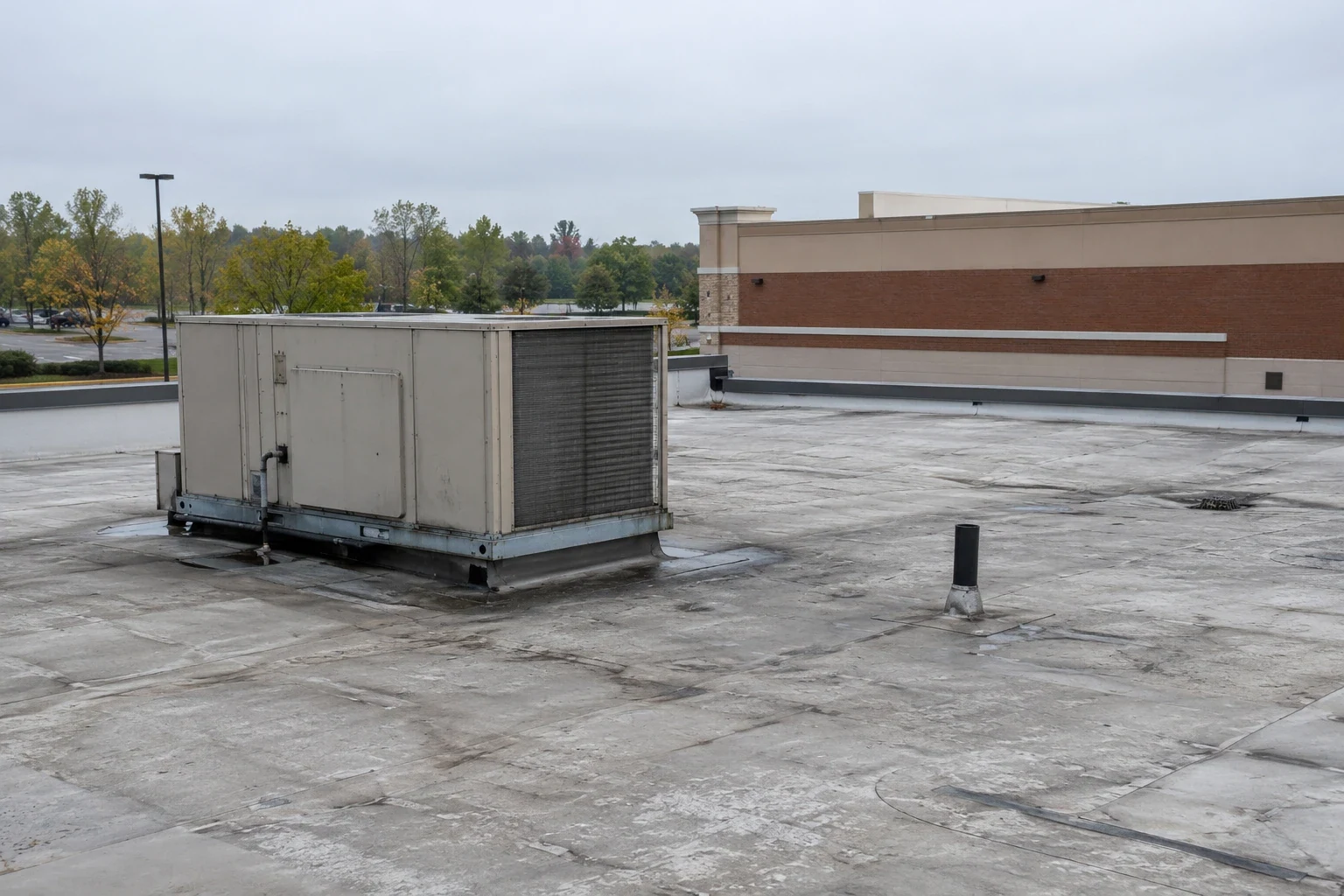
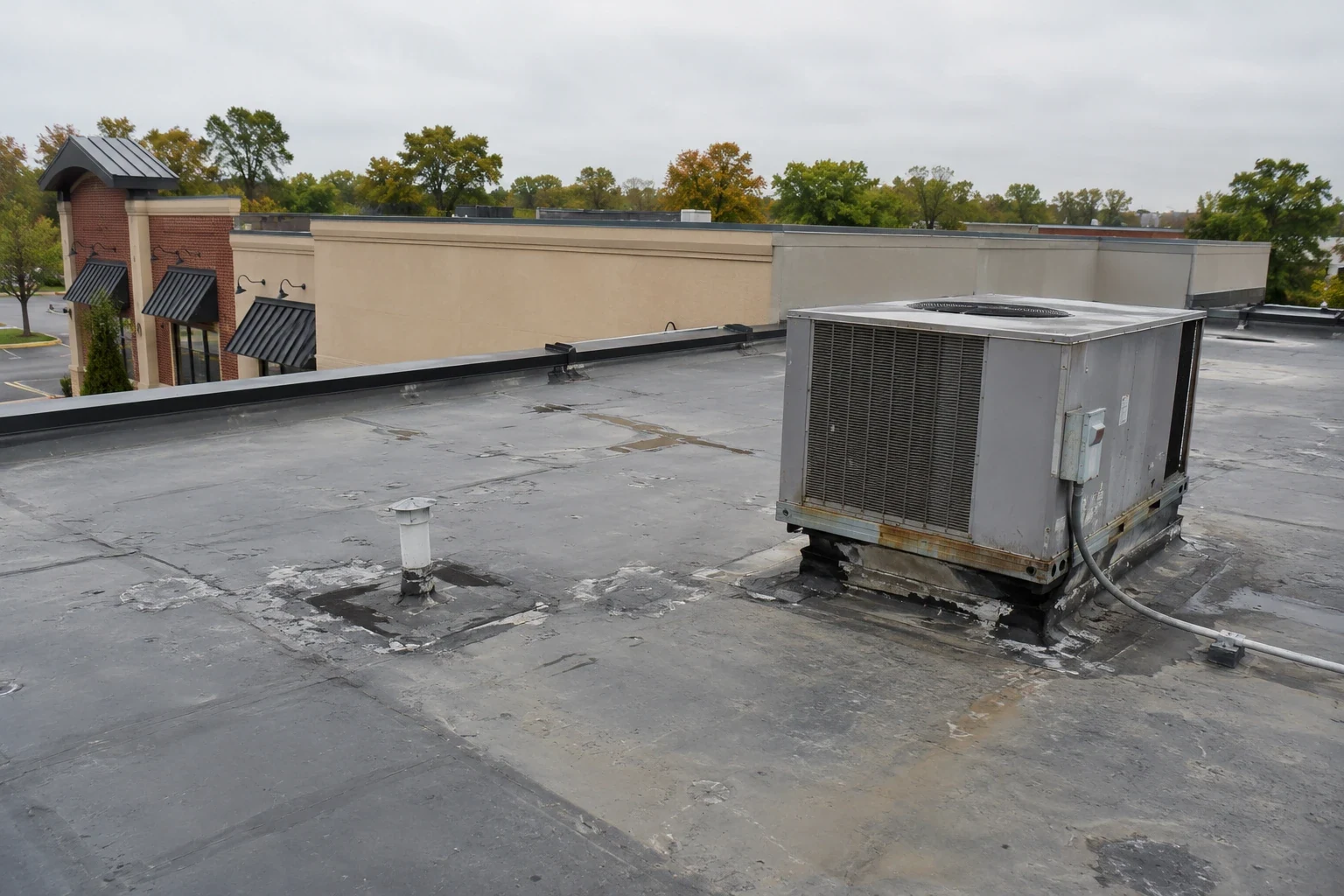
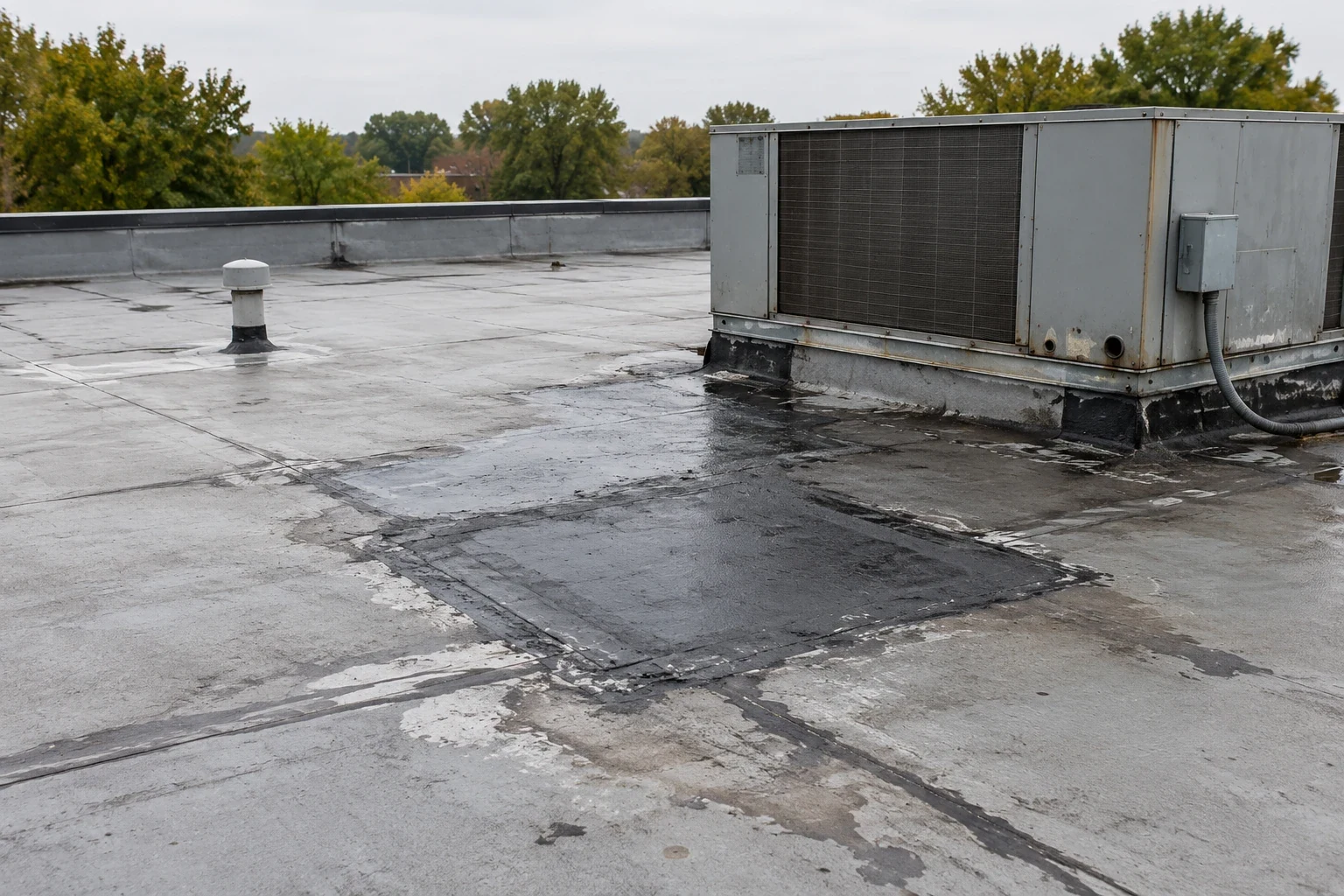
Exhaust fans, ducts, vents, and supports interrupt the membrane. We inspect curb flashing, seams, nearby surfaces, and water retention. Residue can affect preparation, so the repair method must suit the substrate and shed water away from the detail.

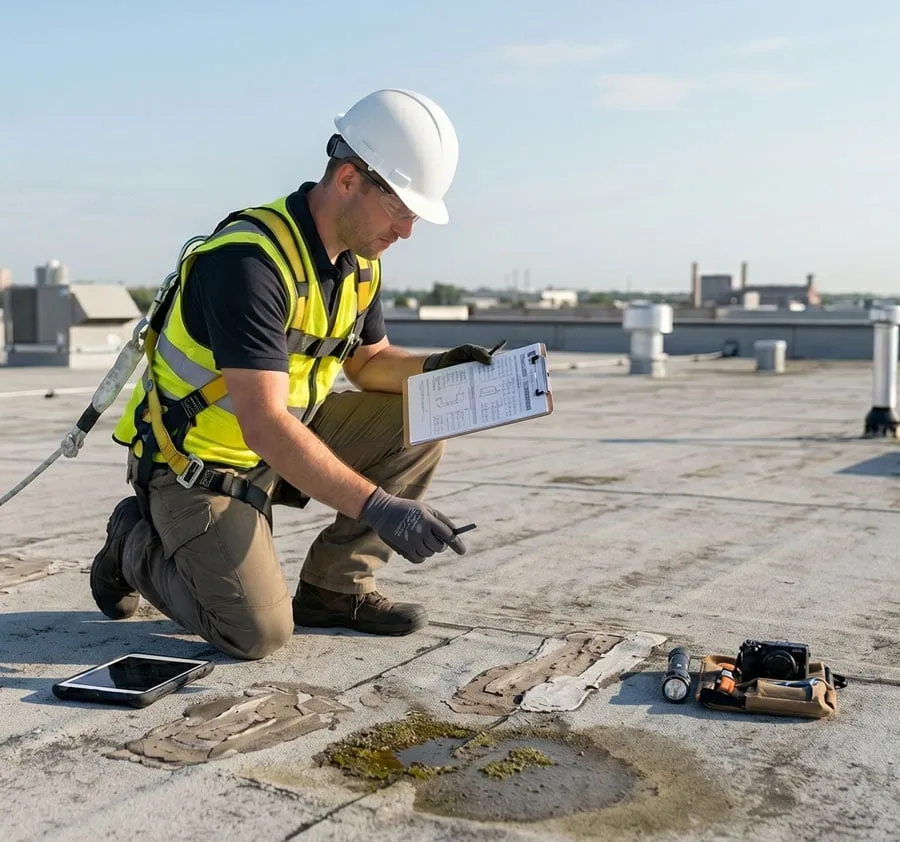
We compare interior reports with roof slope, drains, curbs, and previous repairs. A ceiling mark can be remote from the entry point, and a ventilation or plumbing issue may resemble a leak. We state what the roof review confirms and what another trade should evaluate. A commercial leak investigation can trace likely water movement before a patch is selected.

Moisture beneath the roof surface may extend beyond a visible opening. We mark test areas and determine whether wet insulation should be removed before new material is installed. A commercial roof inspection documents visible conditions, while further testing can define the repair boundary. If the drain connection or overflow route is also damaged, that work belongs in the scope with the affected flashing.

Fit the Work Around Service

Operators identify delivery times, service periods, dining entrances, patio access, air intakes, and equipment restrictions. We coordinate staging, lifts, debris routes, and closures with the property contact, including notice when access changes. Our occupied-building roof sequence sets those access boundaries before mobilization.

These broad districts serve different mixes of residents, visitors, and businesses, while each restaurant sets its own access and operating needs. Idaho Falls includes dining and event activity across Downtown and Snake River Landing; confirm each restaurant’s service, delivery, and event schedule before setting roof access. For roof work in Downtown Idaho Falls, we confirm loading, staging, and entrance routes with the manager rather than relying on the district label.

A phased repair can limit the work area if tie-ins and access support closure. We state the daily boundary, equipment coordination, and who approves a schedule change. Hidden deck conditions are documented before the area is covered.

Work Within the Weather Window

Idaho Falls averages 10.07 inches of precipitation annually. Water control still matters when a roof section is open above food-service areas, while the current forecast determines daily limits. We size each phase to the crew's ability to prepare and close the assembly in the shift, and specify temporary protection at the boundary between completed and existing material.

Freezing periods and summer heat also affect material handling and installation conditions. We check the roof substrate, selected system limits, and current forecast before work begins. If winter snow or ice restricts access, we document what can be safely inspected and whether a drain, seam, or edge needs a follow-up review after conditions improve. Timing should follow the assembly and safe access rather than the calendar alone.

Permits, materials, shutdowns, deliveries, and concealed damage can alter the sequence. We list those dependencies and ownership decisions. A weather hold needs a stop point and temporary cover.

Repair the Cause, Not Just the Surface

A limited flashing failure with dry surrounding material may support a focused repair. If moisture has spread, seams have opened in several areas, or the deck is compromised, a broader renewal may be appropriate. A recover is considered only after checking moisture, attachment, layer limits, and the suitability of the existing assembly. We document the evidence and define where the scope stops.

For a restaurant, system selection should account for exhaust curb geometry, service access, drainage, and compatibility with the existing roof. A built-up roof assembly or another membrane requires details suited to those conditions. Sealant alone cannot resolve wet insulation, a failed drain connection, or a loose curb transition. Project teams confirm which adopted Idaho Falls building and energy requirements apply to a repair or reroof.

For other food-service buildings, grocery roof planning may include refrigeration equipment and receiving routes, while hotel roofing adds guest access and lodging schedules. Restaurant conditions still come from the roof and the operating plan at the actual property.

Make Service and Roofing Costs Visible

Cost drivers include access, roof height, equipment curbs, duct supports, removal depth, wet insulation, drains, edge details, and temporary protection. Coordinating a lift or noisy work around meal service can change staging and daily production. We identify those items separately and describe how concealed conditions will be measured and approved, so the manager can compare repairs without hiding scope inside a single total.

If active water entry needs immediate control, we identify the temporary step and its limits before presenting permanent repair. A drain and scupper correction may be part of the permanent scope if outlets or overflow paths contribute to the problem. After repair, a maintenance plan can revisit exposed flashing, seams, and drainage before the next budget review.

Photos and marked roof areas help ownership coordinate with kitchen or property staff. The record lists completed details and work that needs another trade, giving ownership a clear handoff.

Questions About Restaurant Roofing

It may be possible when access routes, staging, noise, air intakes, and overhead protection are coordinated. We agree on work zones and any temporary closure with the manager, then keep each open section within the amount that can be secured in the shift. The service schedule and roof conditions determine the sequence.

We review curb flashing, seams, terminations, supports, nearby membrane, and drainage around the equipment. Residue or service access can affect preparation and repair methods. If a defect is near an exhaust, we still trace the water path and distinguish roofing work from mechanical repairs.

Water can move along insulation or a deck before reaching an interior ceiling. We compare the reported room with roof slopes, curbs, penetrations, and drains, then test suspect material where appropriate. The scope follows the documented path rather than the nearest visible roof detail.

The property contact identifies service times, loading paths, patio or dining access, and any equipment restrictions. We plan staging, debris handling, and lift movement around those constraints, with a named contact for changes. If a condition adds work, ownership approves it before the sequence expands.

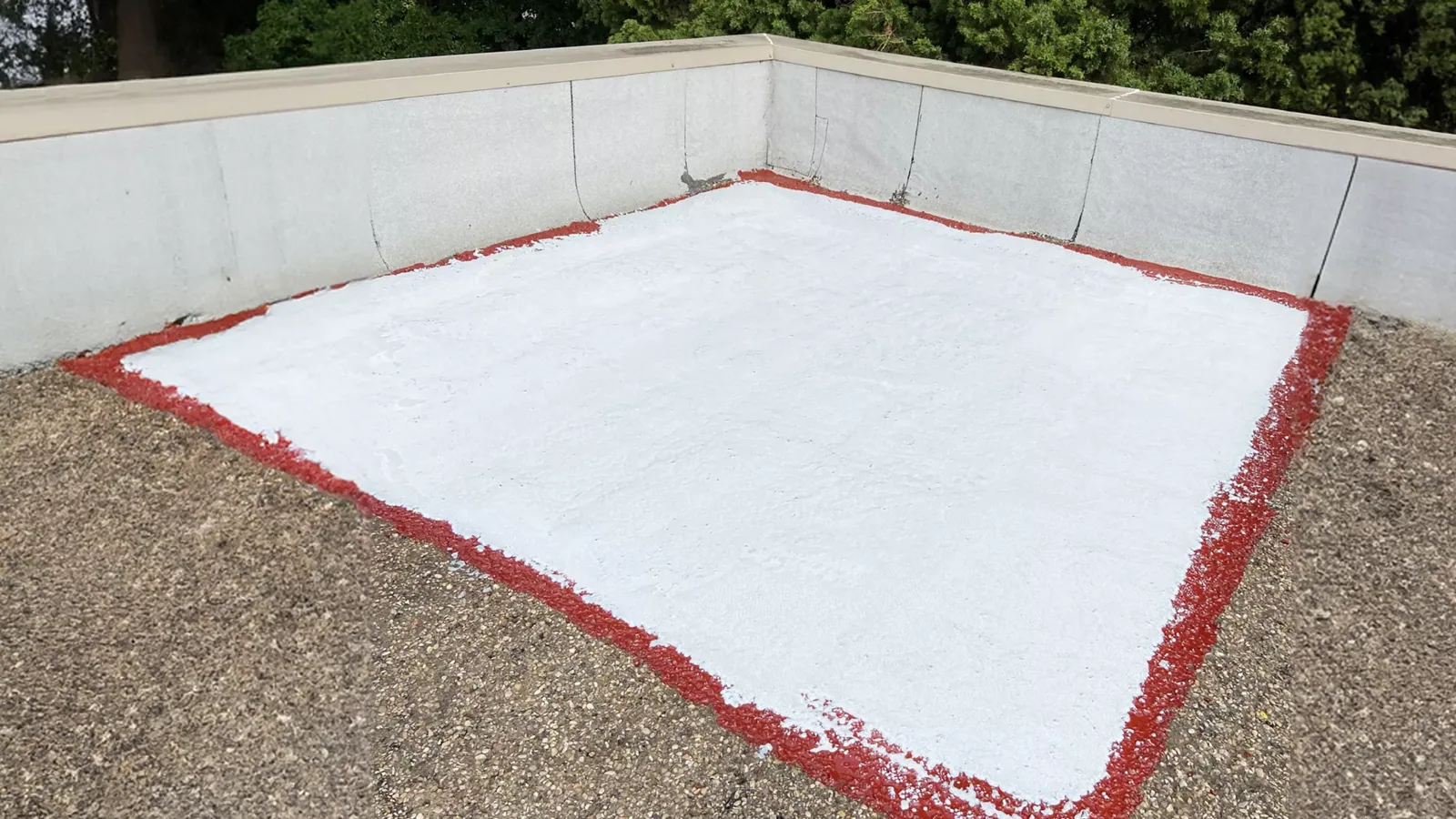
A coating may fit when the existing substrate is sound, dry, and compatible. It will not correct failed flashing, a wet assembly, or a drain defect by itself. We inspect those conditions and explain whether repair, restoration, or replacement better matches the findings.

ServicesRoof SystemsIndustriesProperty TypesService AreasDamage RepairCapabilitiesManufacturersContactAboutRequest a Roof Assessment555-555-5555
Call us today555-555-5555