Commercial Roofing in Iona, ID Serving Idaho Falls & Eastern Idaho

Commercial roofing in Iona combines a roof-specific condition report with permit coordination, drainage checks, and weather-aware work limits.

Iona in Idaho Falls, ID

Iona

Snowmelt and repeated freezing can expose a weak transition, outlet, or flashing before a leak becomes easy to trace. Iona provides municipal water service, and the Iona-Bonneville Sewer District provides sewer service. For a commercial roof project, the owner or design team confirms permit needs before work that changes structure, drainage, or building use. The roof inspection establishes the assembly, drainage path, and repair need; the owner confirms any municipal review that applies to proposed work.

Idaho Falls averages 44.2 degrees annually, and May brings its highest monthly precipitation average at 1.57 inches. At Iona properties, we check current roof conditions, wind, and product instructions before setting how much area can be opened and closed in a shift.

The first walk ties reported interior signs to visible roof details, notes access limits, and identifies what needs testing. The written scope separates immediate water control from permanent repair and lists any design or trade handoff the property manager should coordinate.
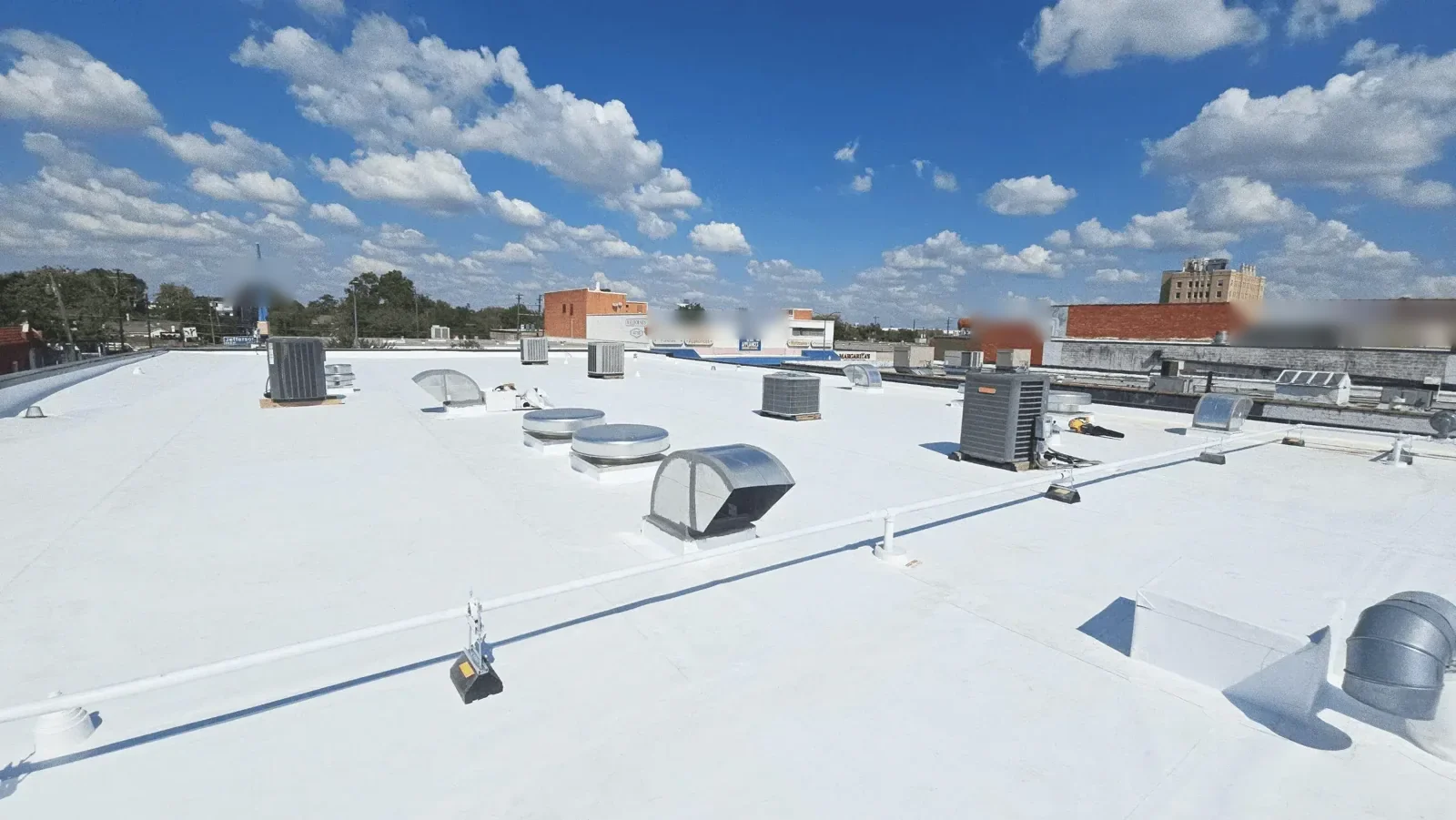
Iona in Idaho Falls, ID

Find the Roof Condition Before Work

A field inspection identifies the roof system, drainage, edges, and penetrations at each Iona property. We inspect membrane or metal where visible, attachment, seams, edges, curbs, penetrations, drains, and prior repairs. Separate additions may have different materials and drainage. We label the areas individually and record surfaces or details that could not be confirmed without more access or testing.

A commercial roof inspection pairs photographs with the roof zones and visible condition. If moisture may have moved into insulation, an infrared survey or selective opening can help define the affected area. The report states what was observed, what is suspected, and which next step would answer an open question before a repair is priced.

Iona’s forms include a commercial building-permit process and land-use applications. We describe the roofing work and flag coordination questions for the owner’s design or permitting contact rather than assuming every scope follows the same review. If project documents call for a permit or another trade, those dependencies are listed with the repair boundary.

Coordinate Utility and Trade Work

The city’s water service and the Iona-Bonneville Sewer District identify separate municipal utility responsibilities. A roof project still begins with roof drainage and the building’s stormwater details, so we inspect drains, scuppers, overflows, and nearby membrane rather than assuming utility service resolves a roof condition. If planned work affects pipes, curbs, or other penetrations, the estimate identifies the trade handoff.

An occupied-building sequence lays out access, material staging, active entrances, rooftop equipment, and the daily dry-in limit. If another contractor is changing a service line or curb, the scope notes when the roofer can complete and inspect flashing. This keeps roof work tied to the building’s operations and the approved work area.

Iona is included in Bonneville regional transportation planning alongside Idaho Falls, Ammon, and Ucon. For a property also managed in Ammon, keep roof-zone photos, drainage, access, and scope separate. The cities may share a regional planning context, but each building’s roof and schedule are specific to its site.

Separate Roof Drainage From Utility Service

Water entering a room can travel below a membrane or through insulation before it appears. We work from the interior sign toward the roof details above and upslope, checking seams, parapets, curbs, skylights, exposed edges, drains, and scuppers. If a visual inspection does not find the entry point, we identify whether a moisture survey or selective opening would clarify the route.

Municipal water service and sewer service are distinct from roof drainage. At the roof, we inspect the outlet, strainer, drain bowl, overflow path, scupper, and the surface leading to it. Debris at an outlet may be cleared as maintenance, while water that repeatedly remains on the surface calls for review of slope, insulation, or deck support. The drainage repair scope separates outlet service from a change to the roof assembly or supporting structure.

Active interior water can receive emergency response at any hour, including weekends and holidays. Once roof access is safe, we record temporary protection and the permanent repair separately. If the assembly is damp or the source still needs confirmation, that condition sets the next step before close-in.

Protect the Weather Window

Idaho Falls averages 84.3 days with measurable precipitation each year. We use the live forecast and roof condition to define a temporary seal, work limit, and a safe point to pause installation.

Idaho Falls’s average monthly precipitation reaches 1.57 inches in May, its highest monthly average. Before work, we check current weather, define the temporary tie-in, and identify conditions that pause tear-off. A snow and ice roof check can record exposed details after winter and help distinguish repair work from a need for more inspection.

Budget and schedule are affected by how many penetrations and edge transitions must be rebuilt, whether old layers come off, and how rooftop equipment is handled. We show visible quantities separately from a concealed-condition allowance and seek approval if the opened assembly differs from what inspection could establish.

Choose Work That Fits the Assembly

A focused repair fits a bounded defect when surrounding material is sound enough to accept a compatible tie-in. We check seams, attachment, substrate, flashing, and drainage. If moisture crosses several roof zones or the deck is weak, testing or selective removal may be needed before a patch can be called permanent. The estimate states the evidence behind its repair limit.

A recover is considered after moisture, attachment, compatibility, and project limits have been checked. The recover evaluation compares an overlay with removal and deck access. When replacement is appropriate, the replacement scope identifies the assembly, insulation, edges, penetrations, drainage, and concealed-condition approval process. Coating also requires a compatible surface and sound substrate.

Permit requirements depend on the proposed work; the roof assembly and inspection findings guide the roofing option. We tie that decision to the inspected roof and list the design or permit coordination the owner needs to confirm before work starts.

Leave a Clear Maintenance Record

Closeout should identify repaired roof zones, materials, photos, access limitations, and any detail left for follow-up. A maintenance visit can return to drains, seams, penetrations, and previous repairs according to the installed system and the property’s access rules.

Iona’s municipal water service, the Iona-Bonneville Sewer District, and regional planning ties with Ammon and Ucon describe the city’s service context. A separate property in Idaho Falls needs its own inspection and estimate. We keep recommendations with the roof and building conditions actually reviewed.

A useful report distinguishes urgent water control from permanent repair and planned work. It also identifies who must approve concealed conditions if the assembly is opened. That gives the next maintenance visit or budget review a record it can compare with current findings.

Questions About Iona

No. Roof drainage is inspected at the membrane, drains, scuppers, overflow paths, and the surface leading to the outlet. We identify roof-level maintenance separately from a slope, insulation, or deck concern.

The owner’s project team confirms which review applies to the proposed work. We describe repair, recover, or replacement scope and identify any design or trade coordination needed before mobilization.

We inspect above and upslope from the interior sign. If a roof walk leaves the water route uncertain, we recommend a targeted moisture test or selective opening to define the affected area.

We check the roof surface, current weather, and material instructions before opening or tying in the roof.

Keep photos, roof-zone labels, completed repairs, materials, access limits, and conditions needing follow-up. Temporary water control should be separate from permanent work so later reviewers can see what remains.

ServicesRoof SystemsIndustriesProperty TypesService AreasDamage RepairCapabilitiesManufacturersContactAboutRequest a Roof Assessment555-555-5555
Call us today555-555-5555