Commercial Roof Leak Repair in Idaho Falls, ID Serving Idaho Falls & Eastern Idaho

Trace commercial roof leaks in Idaho Falls to seams, drains, curbs, or edges, then document water control and repair options for the building.

Roof Leak Repair in Idaho Falls, ID

Roof Leak Repair

May brings the highest monthly mean precipitation in the Idaho Falls averages, 1.57 inches. Inspect drainage and flashing at each property, then use current weather and interior signs to set the repair response. Water can travel along a deck, insulation joint, conduit, or framing member before showing inside. We trace the route, inspect details above it, and document findings before selecting a repair. The manager can then weigh immediate water control against a broader correction.

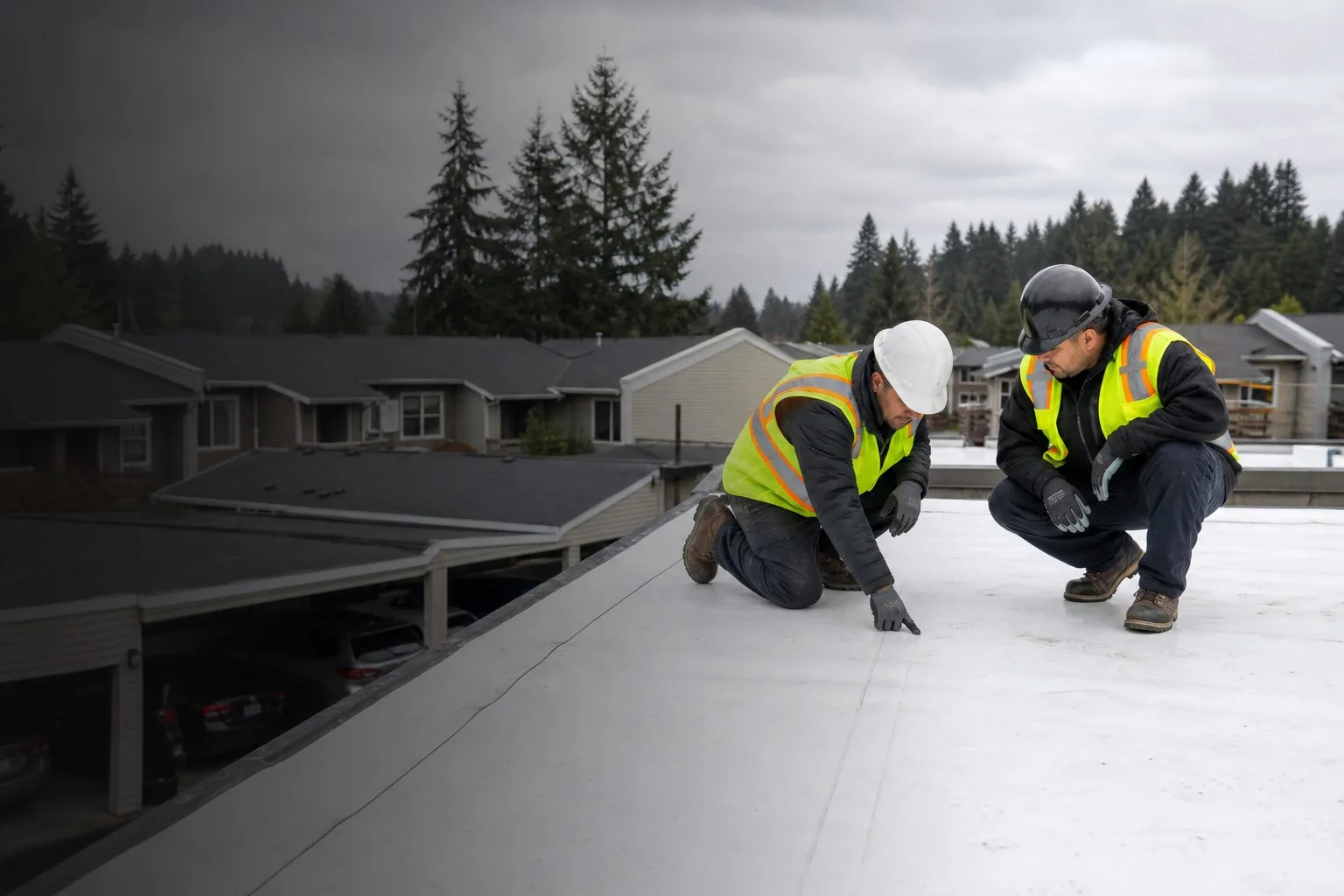
We note where water appears, whether it follows rain or thaw, and whether equipment or stored materials are at risk. On the roof, we inspect seams, penetrations, curbs, parapets, drain bowls, scuppers, and prior repairs for a path beyond the visible break. The Idaho Falls Warehouse District combines Broadway and Maple storefronts with warehousing and light industry, a mix that shows how access and interior protection can vary by property.
Roof Leak Repair in Idaho Falls, ID

Follow the Water Path

Water can enter at a failed lap, split flashing, loose termination, puncture, clogged drain, or open edge. Once below the membrane, it may travel across the deck before reaching a ceiling or wall. We compare the reported interior location with roof slopes, seams, penetrations, and transitions, then check the likely path for more than one defect. If the opening is not visible, moisture mapping or a small test cut can help identify wet insulation. We mark the limits and explain the confidence of the diagnosis rather than treating every ceiling stain as proof of the roof area above it.

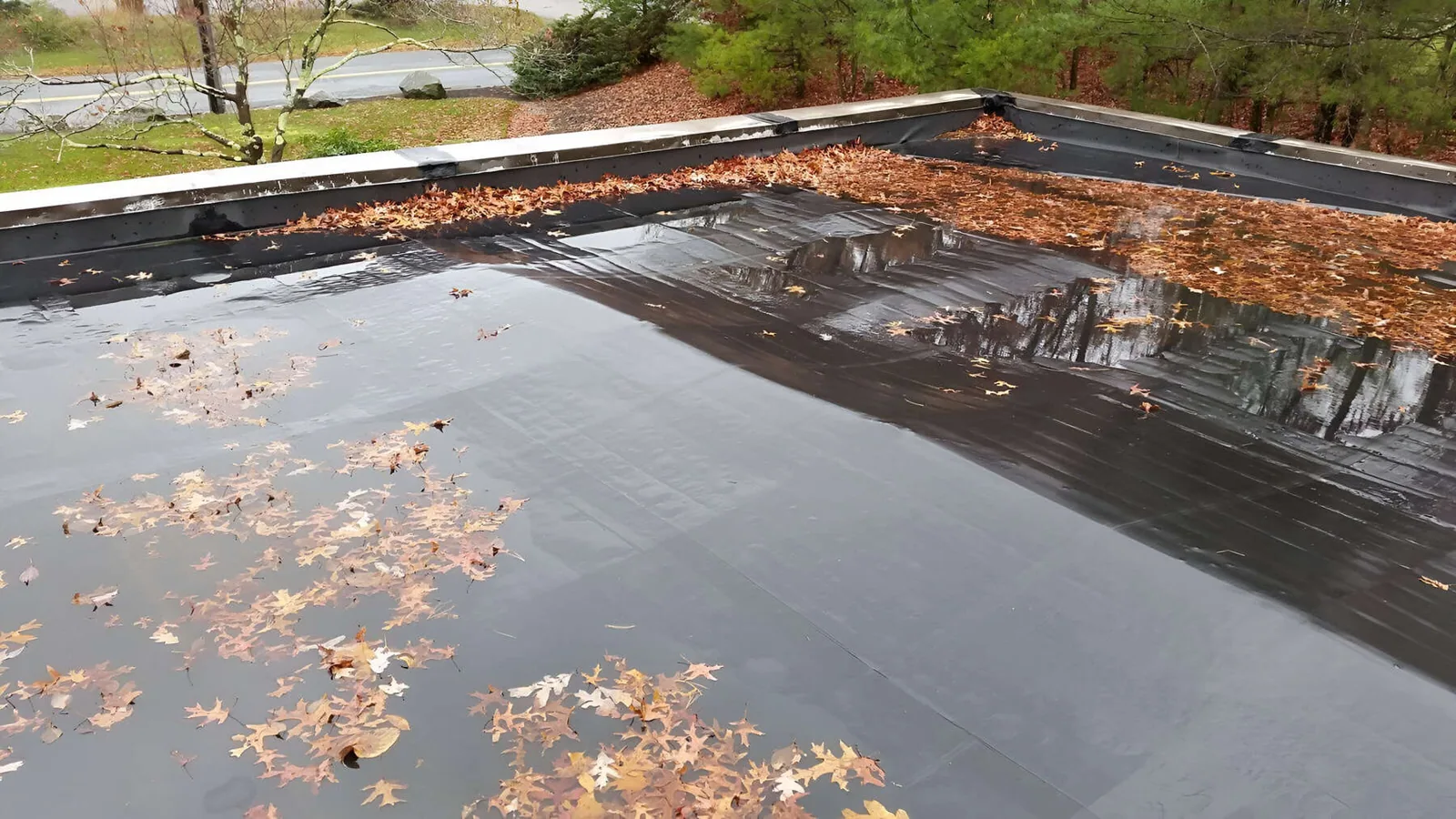
Drainage is a frequent part of the investigation. We check whether the roof drains and scuppers are clear, whether water can reach them, and whether the surrounding flashing remains secure. A blocked outlet can leave water standing against a seam or curb, while a damaged drain connection can leak directly into the assembly. If the outlet or pathway is part of the cause, drain and scupper repairs belong in the corrective scope. We record debris, low areas, and any nearby edge conditions so the owner sees what needs attention beyond the first patch.

Stop Water Without Hiding Damage

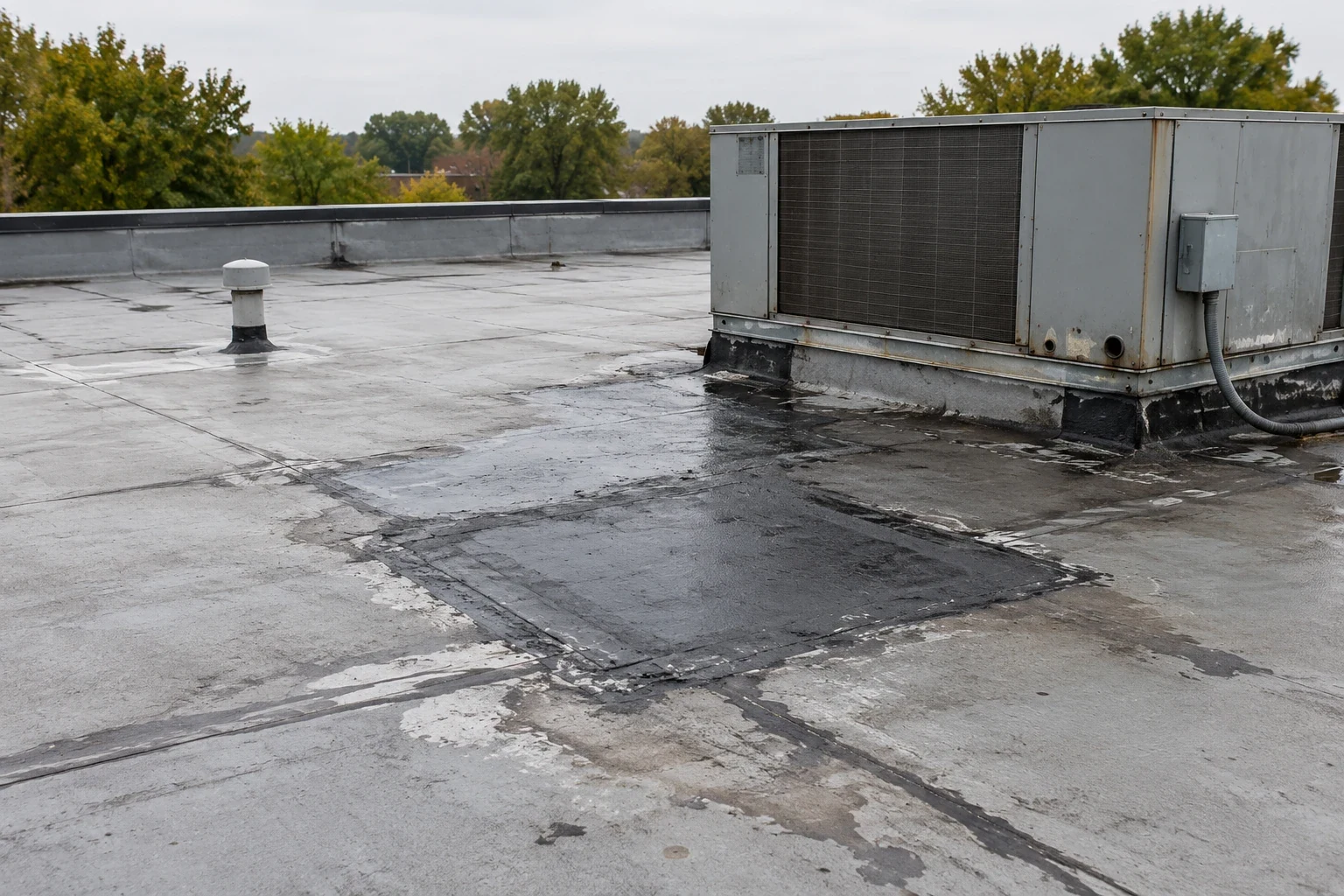
Once the entry point is identified, we choose a repair that matches the roof. A thermoplastic seam may need a weld; an EPDM detail requires compatible cleaning and lap work; a metal panel can call for fastening and seam correction. Coatings and past repairs also affect preparation. We remove failed material where necessary, confirm the substrate is sound, and tie the new work into the existing assembly so water sheds across the repair. A bead of sealant over an unknown surface is not a substitute for preparing and rebuilding the detail.

When water is active, temporary protection can limit further interior exposure while permanent repairs are planned. We identify what the temporary measure protects and what remains open for follow-up. If wet insulation or deck damage is present, the repair scope should include removal and replacement of the affected section rather than concealment. For a broader membrane concern, seam-failure repair may involve adjoining laps and attachment, while a planned roof repair can address related details once the leak is controlled.

Use the Weather Record Carefully

Idaho Falls averages include 182.2 days each year with minimum readings at or below freezing and 14.7 days at or below zero. We ask when the leak started, how it changed with temperature or precipitation, and whether snow was present. That history helps us distinguish an ongoing opening from seasonal ice or drainage behavior and guides the right test. The repair still follows what the roof inspection shows.

Hitt Road and 25th South is a major Ammon corridor with retail, medical, professional, and technology activity in nearby growth areas. A leak over a clinic, shop, warehouse, or office can affect very different operations, so we coordinate interior protection and roof access with the facility contact. We also note air intakes, electrical equipment, and areas that should not be crossed during the repair. A related snow and ice damage review can separate a damaged detail from a drain blocked by seasonal conditions.

Record What Is Fixed and What Remains

Findings include the reported interior area, likely entry point, affected assembly, photographs, and repair boundary. We note moisture testing, inaccessible areas, and whether observation after the next rain is warranted. The work order separates temporary water control, permanent repair, and follow-up. That record helps communicate with tenants and supports insurance or capital planning without confusing a temporary measure with a completed correction.

Idaho Falls has offices, retail, restaurants, health-care facilities, education buildings, and industrial properties. The Idaho National Laboratory Research and Education Campus contains offices and labs. For any occupied building, we confirm room restrictions and sensitive equipment with the facility contact, then protect areas affected by access or repair.

Decide Whether the Leak Is Isolated

A single opening with sound surrounding material can be a focused repair. Several leak locations, recurring interior signs, wet insulation across a broad area, or repeated failure at the same transition may indicate the assembly needs a wider review. We show the observed limits and explain the options: repair the detail, replace an affected section, test more areas, or compare repair with recover or replacement. A property manager can then align the scope with the building's near-term needs without confusing the visible drip with the full extent of damage.

Access, system compatibility, interior protection, moisture testing, and the number of transitions influence cost. Weather and safe roof access influence timing. We state those drivers in the proposal and identify any allowance for concealed conditions. If the roof is stable after repair, scheduled inspections and a maintenance plan can track the detail, drains, and adjacent seams. The next review can compare the new condition with the photos from this leak call.

Questions About Roof Leak Repair

Water can move through insulation joints, along the deck, or around framing before reaching a ceiling. We compare the interior location with roof slope and details overhead, then inspect likely seams, curbs, drains, and edges. Moisture testing can help define the affected area when the entry point is not visible. The repair follows the traced path rather than the stain alone.

Temporary water control may be appropriate when conditions or testing prevent a permanent repair immediately. We explain what the temporary protection covers, what remains exposed, and what follow-up is needed. Once the area is safe to work, we prepare the substrate and install a compatible repair to address the source of water entry.

Record when water appeared, the weather or thaw conditions, affected rooms, equipment or inventory at risk, and any temporary steps taken. Photos of the interior signs help us connect them with roof details. We add roof photographs, test findings, repair boundaries, and remaining recommendations to the job record for future maintenance and budget decisions.

Not necessarily. The path to the outlet may be blocked or settled, the drain connection may be damaged, or water may be held at a nearby curb or seam. We inspect the outlet, surrounding slope, and flashing rather than judging from the drain opening alone. Any drainage correction is listed separately from the membrane repair.

Several entry points, repeated repairs, widespread wet insulation, or a system that no longer accepts a compatible patch are reasons to expand the inspection. We describe what was observed and compare a larger repair, recover, or replacement scope with the immediate correction. Additional testing can define the limits before a capital decision is made.

ServicesRoof SystemsIndustriesProperty TypesService AreasDamage RepairCapabilitiesManufacturersContactAboutRequest a Roof Assessment555-555-5555
Call us today555-555-5555