Commercial Roof Inspection in Idaho Falls, ID Serving Idaho Falls & Eastern Idaho

Inspect commercial roofs in Idaho Falls with hands-on checks of membranes, drainage, transitions, and interior signs, plus a written condition record.

Roof Inspection in Idaho Falls, ID

Roof Inspection

Long freezing periods in Idaho Falls put drains, seams, edge metal, and equipment curbs on the inspection list before the next thaw. Idaho Falls averages show 182.2 days each year with minimum temperatures at or below freezing, alongside a summer season that averages 26.5 days with highs of 90 degrees or more. We walk accessible roof areas, check the assembly in person, and connect each finding to a repair, monitoring, or budget decision.

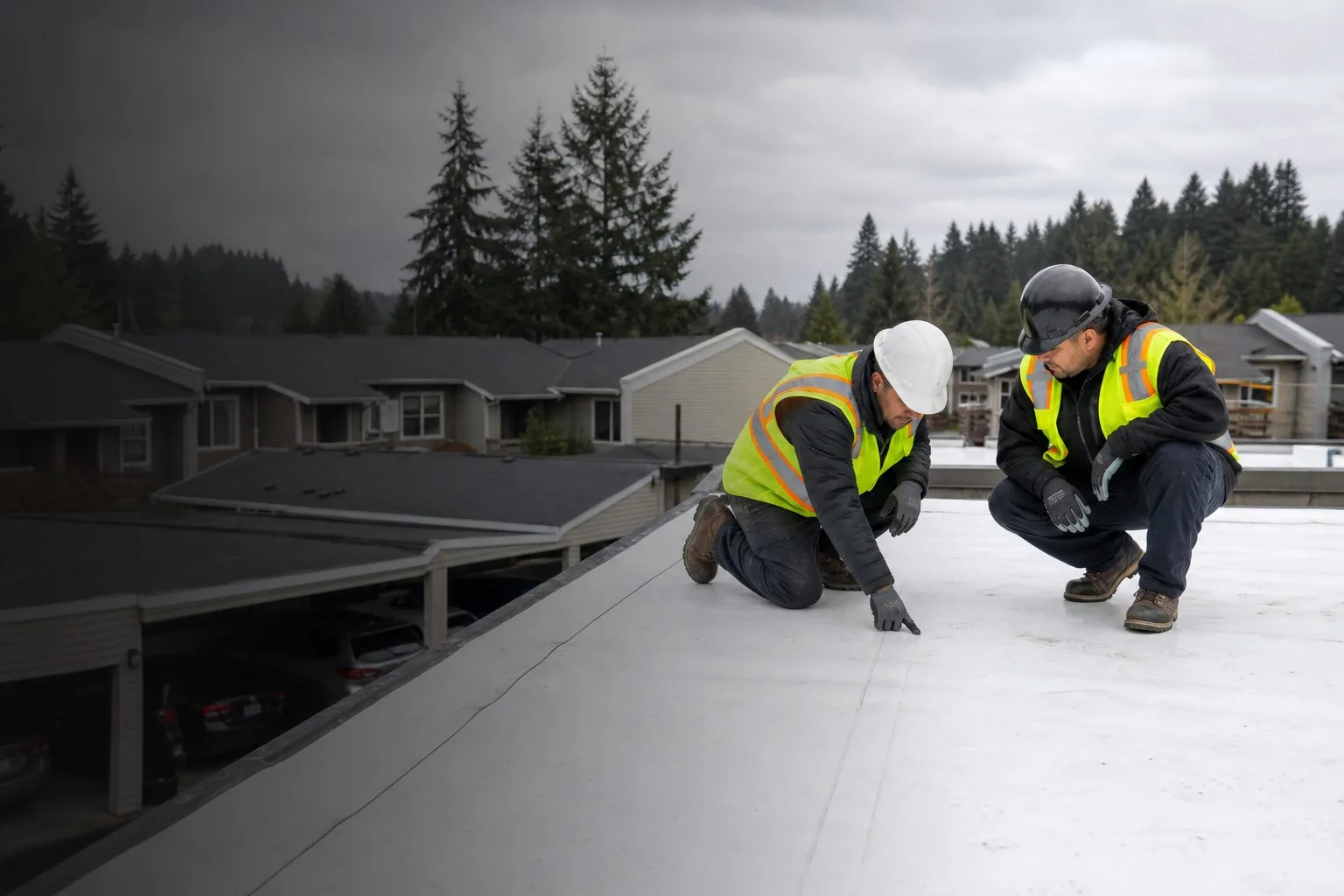
A hands-on inspection is more than a view from a ladder. We identify the roof system, inspect seams and flashing, check perimeter conditions, look at drains and scuppers, and note penetrations, rooftop units, surface wear, and visible repairs. Interior signs can help trace water movement, so we compare them with the roof above and test suspect areas when needed. The report records photos, locations, condition, and limits on access. In the Downtown Idaho Falls core, storefront and office buildings have different access patterns than industrial sites; the inspection sequence reflects the actual property, not a standard checklist.
Roof Inspection in Idaho Falls, ID

Walk the Details That Matter

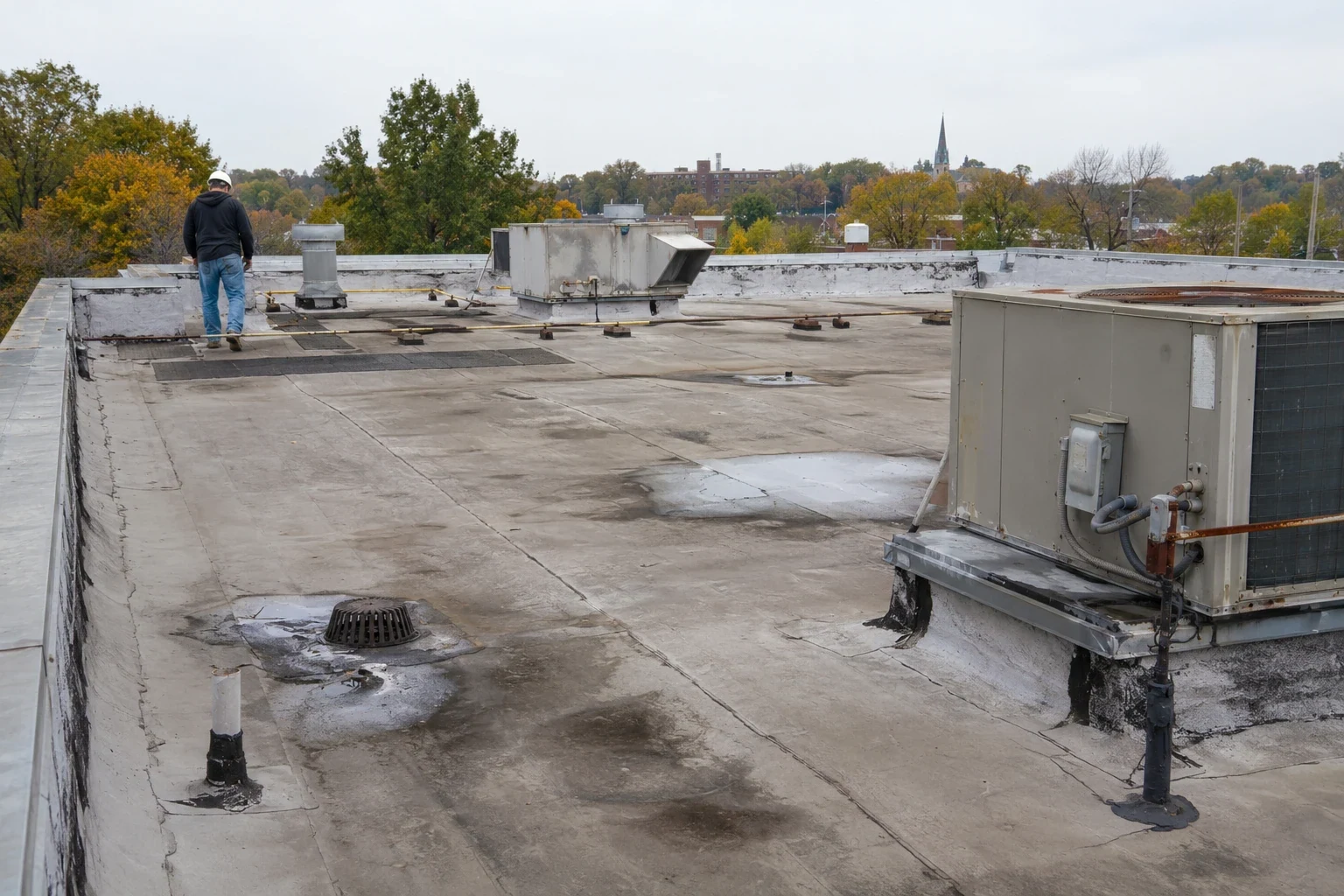
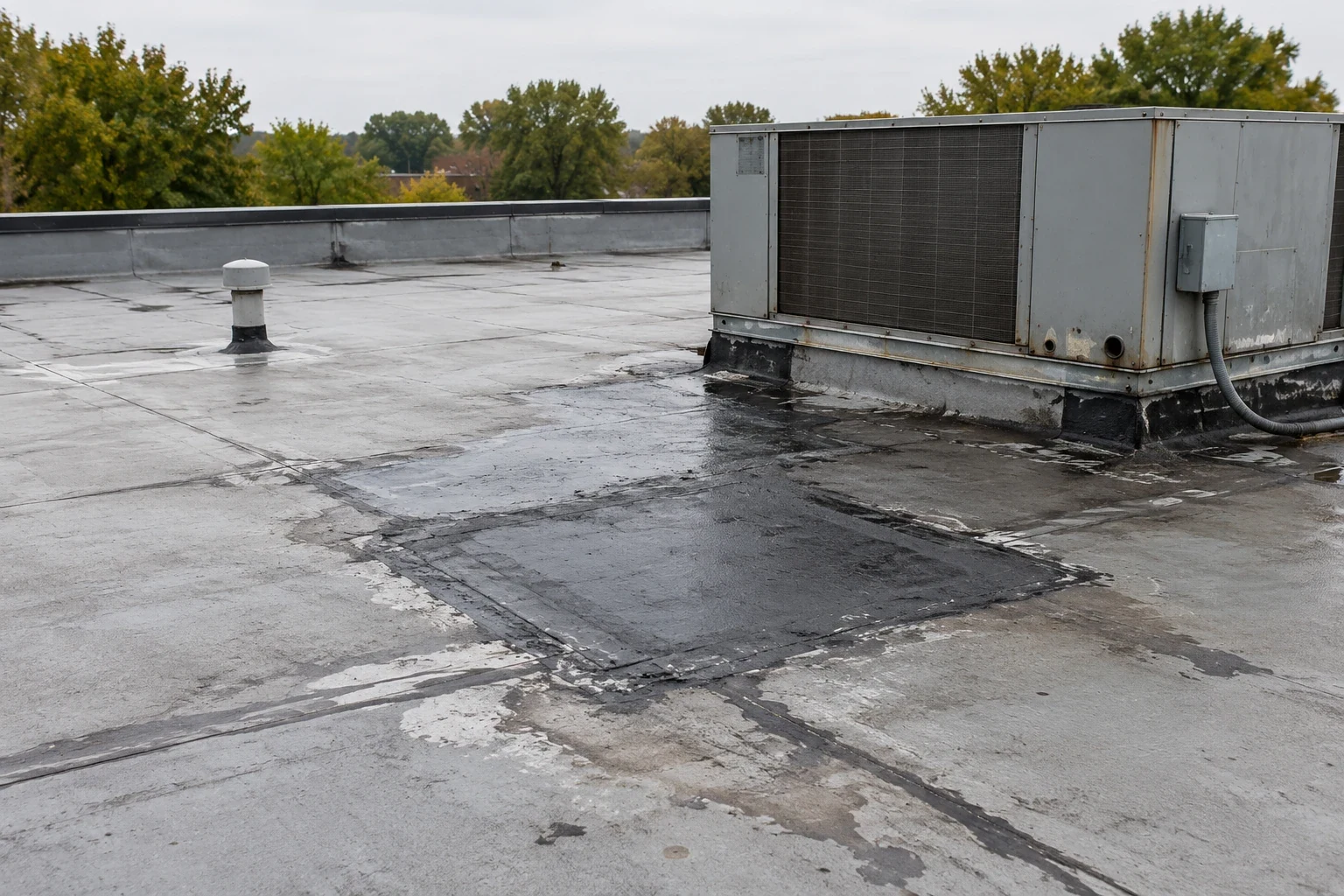
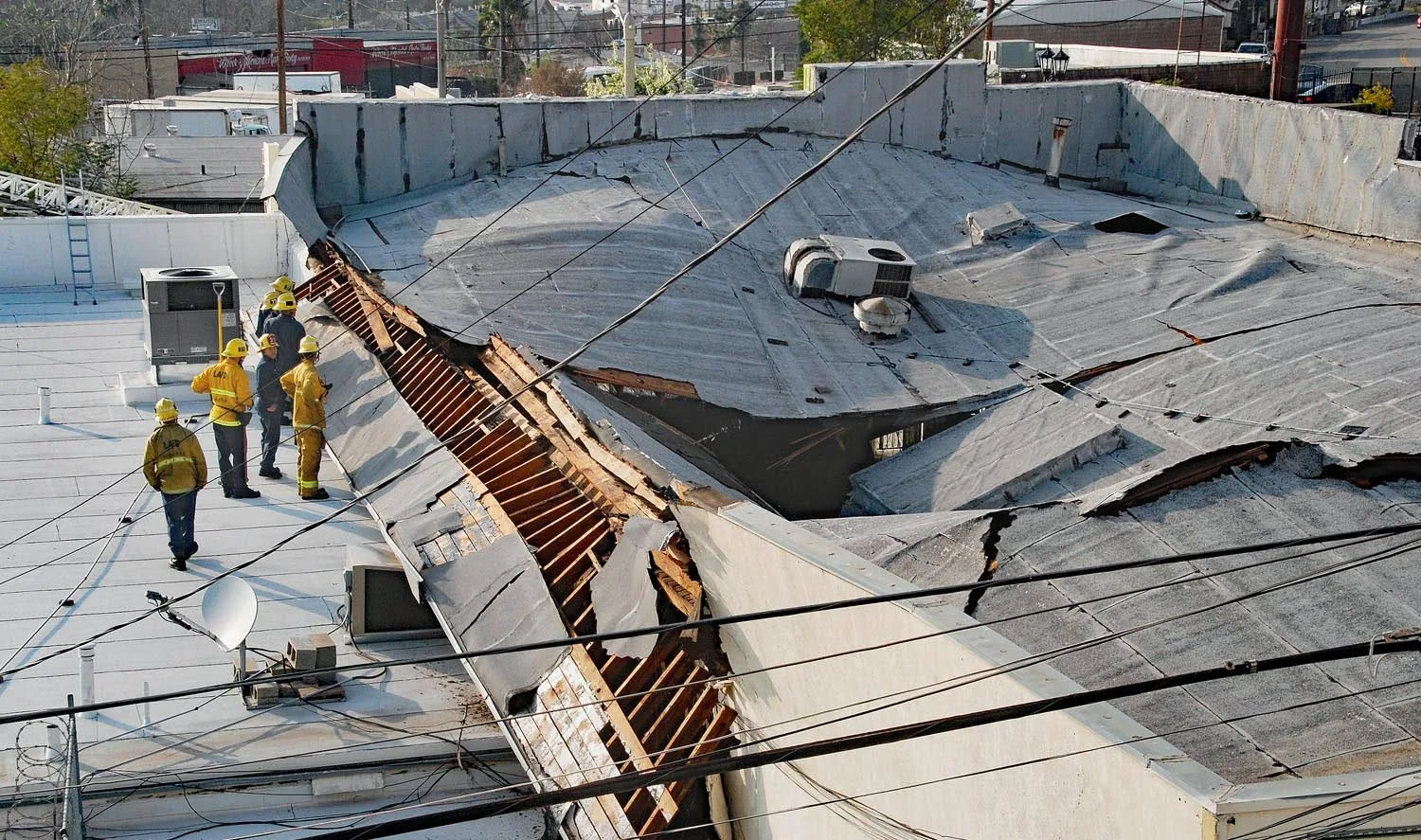
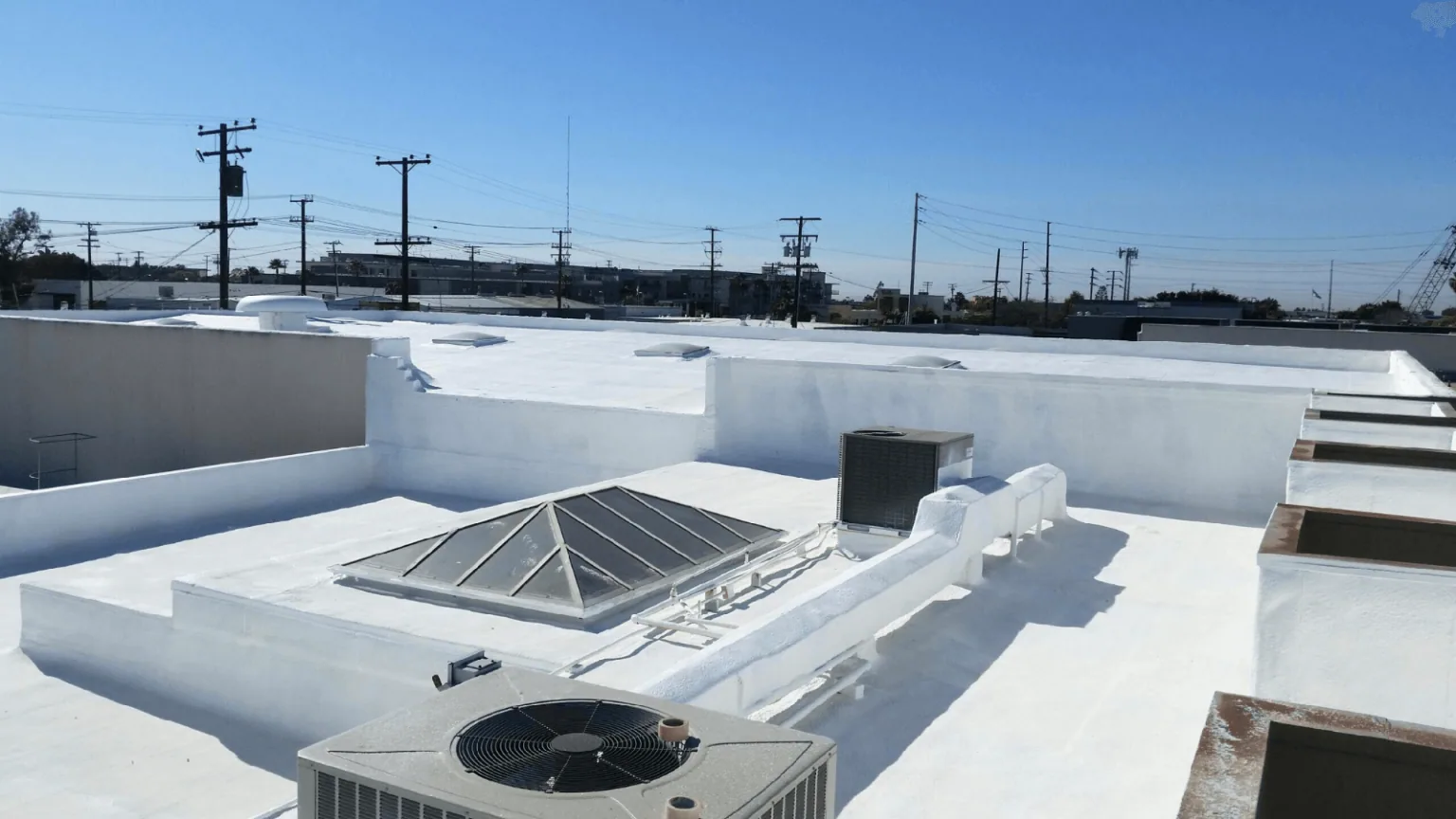
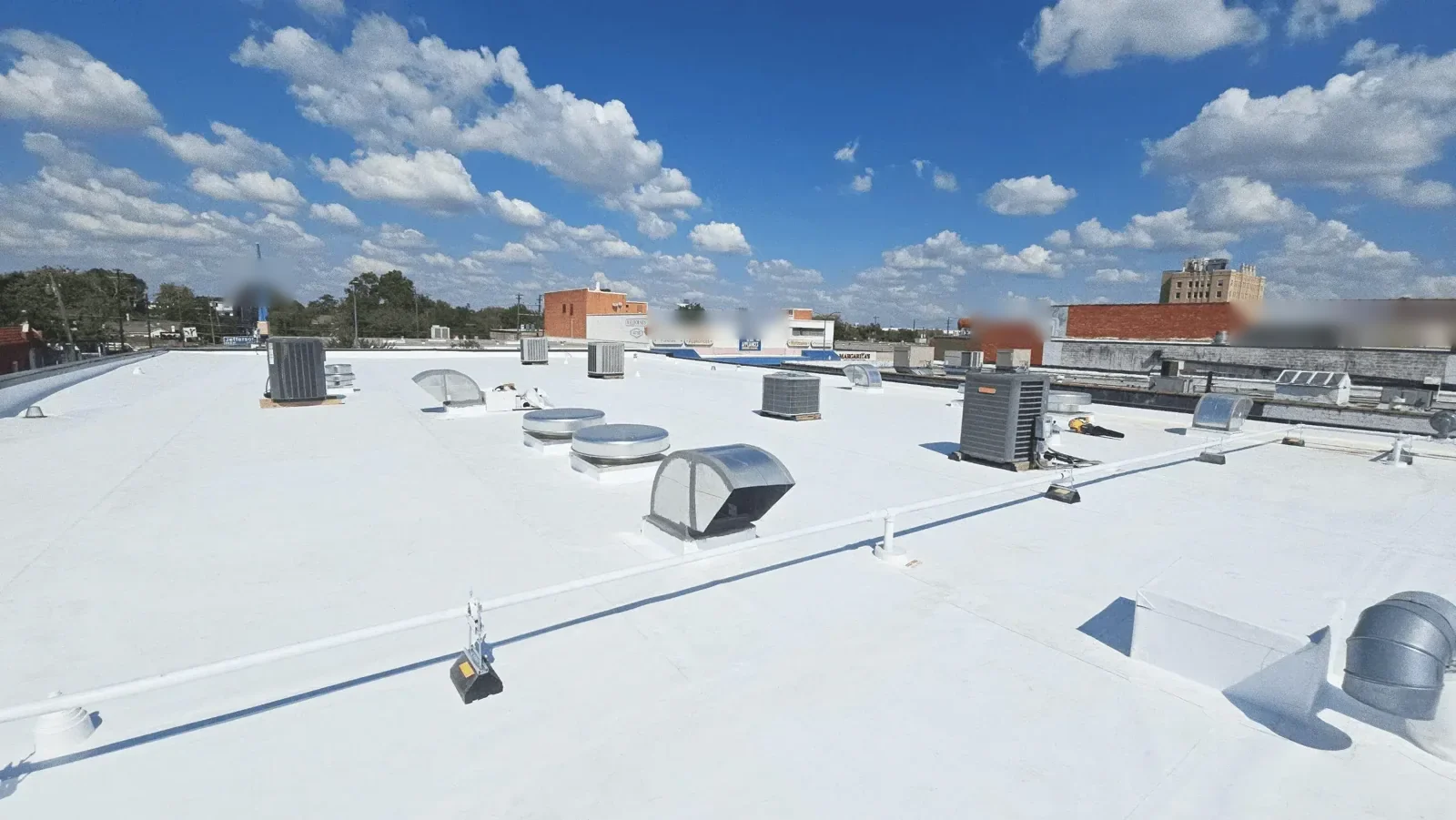
We follow the roof from the field to its transitions. A membrane inspection looks at seams, laps, patches, wrinkles, and areas of wear. At the perimeter, we check edge metal, coping, terminations, and attachment. Curbs, vents, skylights, conduit, and equipment supports interrupt the waterproof layer and need careful review. We look for splits, loose flashing, sealant failure, corrosion, movement, and evidence that a past repair did not hold. If the assembly is unclear, we record that limitation and recommend the test needed before specifying material or repair method.

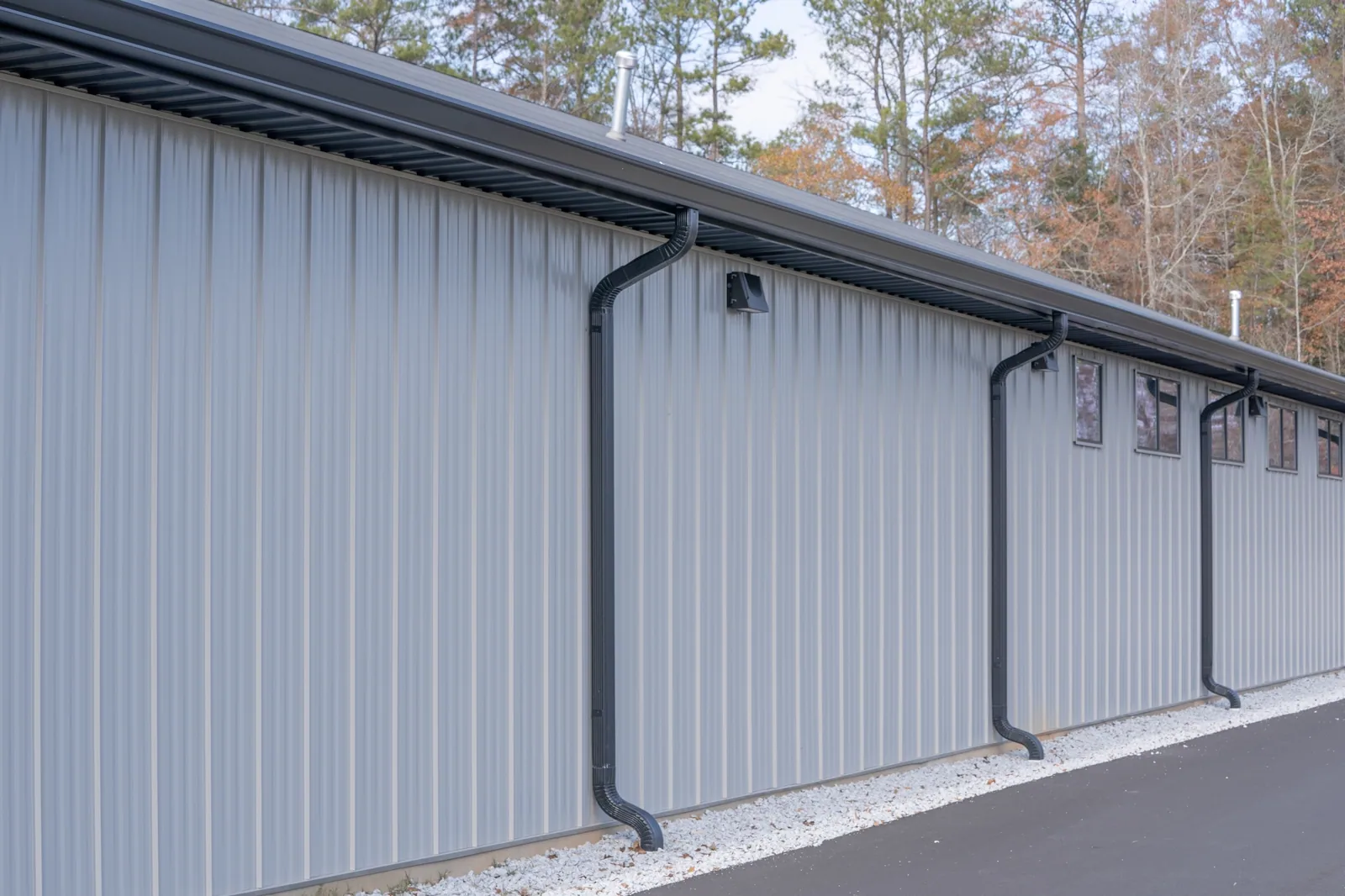
Water management receives its own review. We trace the slope toward drains and scuppers, note debris or standing water, and check whether outlets and overflow routes are open. Ponding may relate to a blocked drain, a settled area, or insulation and deck conditions; we do not assign a cause without evidence. A marked roof plan can show where the water sits and where it should travel. If outlets need work, a drain and scupper correction can be listed separately. This helps the owner decide whether the issue is maintenance, localized repair, or a larger drainage project.

Connect Roof Findings to Building Use

Interior observations support the roof review. We ask about leak history, ceiling marks, seasonal patterns, and rooms or equipment affected. Those details can point toward a curb, seam, or drain, but water may travel before it becomes visible. We compare the reported signs with the roof surface and note where testing is needed. If we perform a moisture survey or core cut, its location and result belong in the record. An inspection can also identify areas that were inaccessible because of snow, equipment, safety conditions, or operational limits; those areas remain open questions rather than assumed sound roof.

Idaho Falls has health-care, retail, restaurant, travel, business, education, and industrial activity. College of Eastern Idaho's campus includes classrooms, labs, health-care education, mechanical and industry/trades buildings. An active classroom or lab can require access coordination and protection of sensitive operations below. We confirm roof access, interior contacts, equipment restrictions, and work areas before the visit. For a property manager overseeing multiple buildings, a written condition record gives each roof a consistent set of observations while preserving differences in assembly and urgency.

Read Findings Against the Season

Winter exposure and summer heat can change what deserves follow-up. We look for open seams, displaced flashing, blocked drainage, exposed insulation, and repairs that may not tolerate another freeze-thaw cycle. Idaho Falls averages show Idaho Falls a January mean near 20 degrees and a July mean daily high of 86.6 degrees. Idaho Falls sets regional context; the roof's observed condition determines the next step.

May averages 1.57 inches of precipitation at Idaho Falls, its highest monthly mean. A spring inspection can record drains and outlets before the wettest average month, then distinguish maintenance items from failed roof details. We also note where snow storage or safe access limited what could be seen. Our heat and UV damage review can help classify surface deterioration when the inspection finds it. The condition record separates visible defects, monitored areas, and corrections supported by the inspection.

Make the Report Useful for Budget Review

Each finding should help a manager make a decision. We describe the location and condition, include photographs, and identify a likely next step: repair, maintenance, further testing, or capital planning. We separate urgent water control from work that can be scheduled with other building activity. When several defects appear together, we explain which are connected and which are independent. The report also names assumptions and access limits, so the reader can tell what was inspected and what was not.

A repair budget depends on membrane type, access, surface preparation, flashing complexity, moisture, and whether the defect reaches the deck. An inspection documents current condition, repair needs, and remaining service priorities so ownership can compare cost and timing for replacement. We can document areas that warrant a closer moisture investigation or a recover-versus-replacement study. If storm or leak damage is suspected, leak tracing or a storm damage assessment can follow the initial walk. The result is a record the facility team can use in a near-term work order and future budget review.

Turn One Visit Into a Roof Record

Weather, repairs, equipment, and building use change roof conditions. A baseline preserves the visible state; a later visit can compare repaired areas and known concerns. The city core plan integrates Downtown and South Downtown, while Snake River Landing combines offices, dining, housing, and event uses. Each roof report should identify its own assembly and access conditions. Photographs tie each finding to a roof zone, so a later visit can compare the same detail.

A preventive maintenance program can revisit drains, seams, edges, and penetrations. We record minor corrections apart from larger repairs so maintenance does not mask a defect. A replacement evaluation can compare the findings with assembly choices and phasing, giving the manager a current condition, action list, and supporting evidence.

Questions About Roof Inspection

It records roof type where identifiable, observed defects, drainage and transition conditions, photos, areas inspected, access limits, and recommended next steps. We separate repair from maintenance, testing, and longer-range budget items. A useful report separates immediate repairs, monitorable conditions, and replacement options using roof findings, documented age, and maintenance history.

Where access is available, we review reported water signs and compare them with roof details above. A stain can be distant from the entry point, so we use the interior location as evidence rather than proof. The facility contact can identify affected rooms, equipment, and leak history; we record those observations with the roof findings.

A visual walk may identify surface clues but cannot always confirm concealed moisture. We can recommend infrared review, test cuts, or other suitable checks when the roof conditions warrant them. The report should distinguish visible evidence from test results and identify where additional investigation is needed.

Snow, ice, heat, wind, and access limits can change what is safe to inspect and how materials behave. We record any areas that could not be reached and arrange follow-up when conditions allow. Idaho Falls climate averages provide context for planning, while the roof surface and current weather control the inspection decision.

An inspection can clarify existing layers, moisture, drainage, flashing, and access before a replacement scope is priced. It may show that repair or recover is still an option, or document why removal should be compared. The useful estimate follows observed conditions instead of relying on a roof age alone.

ServicesRoof SystemsIndustriesProperty TypesService AreasDamage RepairCapabilitiesManufacturersContactAboutRequest a Roof Assessment555-555-5555
Call us today555-555-5555