Commercial Roofing in Shelley, ID Serving Idaho Falls & Eastern Idaho

Commercial roofing in Shelley connects local food, medical, and agricultural uses with a roof-specific inspection and weather-aware repair plan.

Shelley in Idaho Falls, ID

Shelley

Idaho Falls’ winter cycle can affect how a roof detail is prepared, tied in, and closed at the end of a shift. Shelley’s economy is tied to Idaho Falls and agriculture, with food processing and potential industrial expansion among its economic factors. Its business directory includes medical, food manufacturing, and assisted-living operations. Those uses make operating requirements worth confirming, but only a roof inspection can establish the assembly and its condition.

Idaho Falls provides long-term climate context for Idaho Falls. It averages 182.2 annual days with a low at or below freezing and 26.5 days when the maximum reaches 90 degrees. For a Shelley roof, check the active forecast and surface condition before setting the work area. We use them to frame seasonal planning, then rely on current temperature, roof-surface moisture, wind, and the selected product’s instructions to set the safe work window.

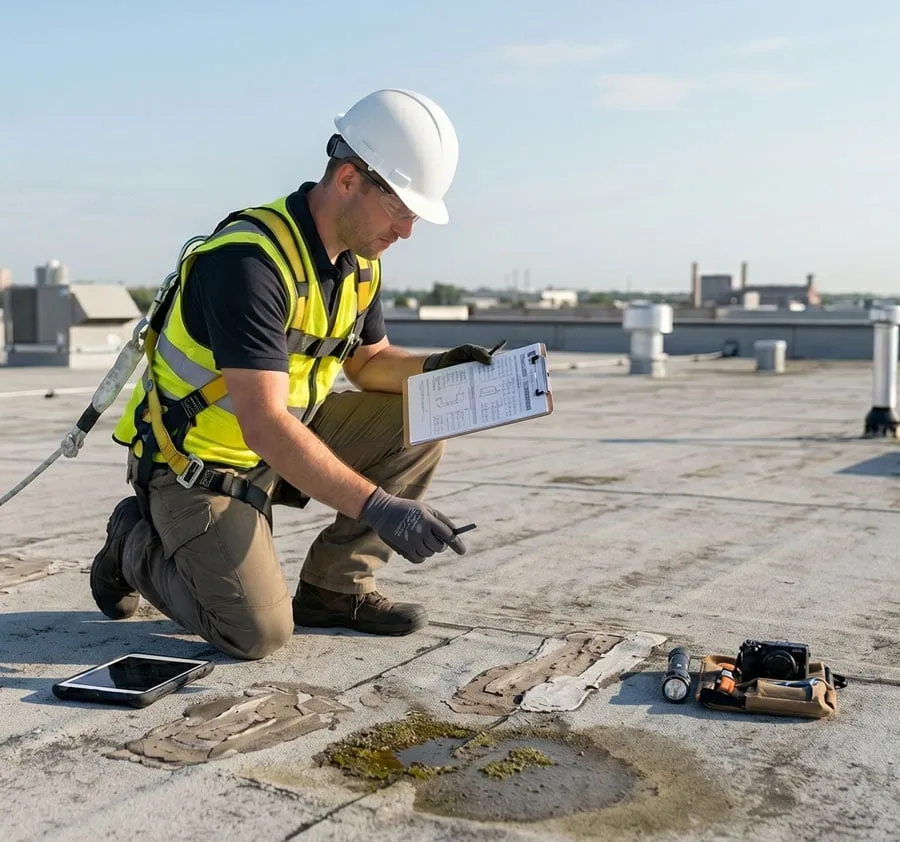
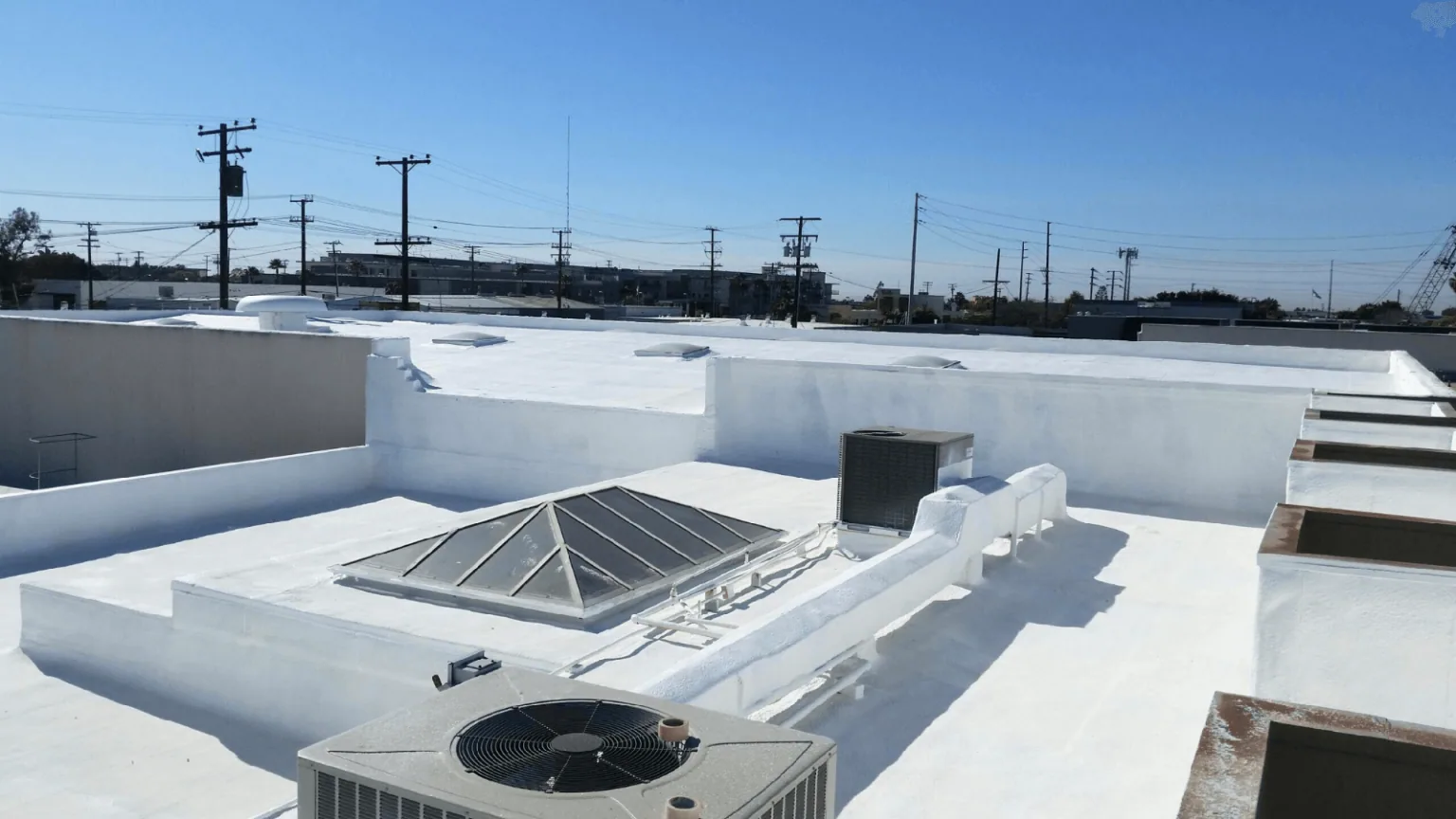
The first walk identifies roof material, transitions, outlets, and access limits before scope is set.
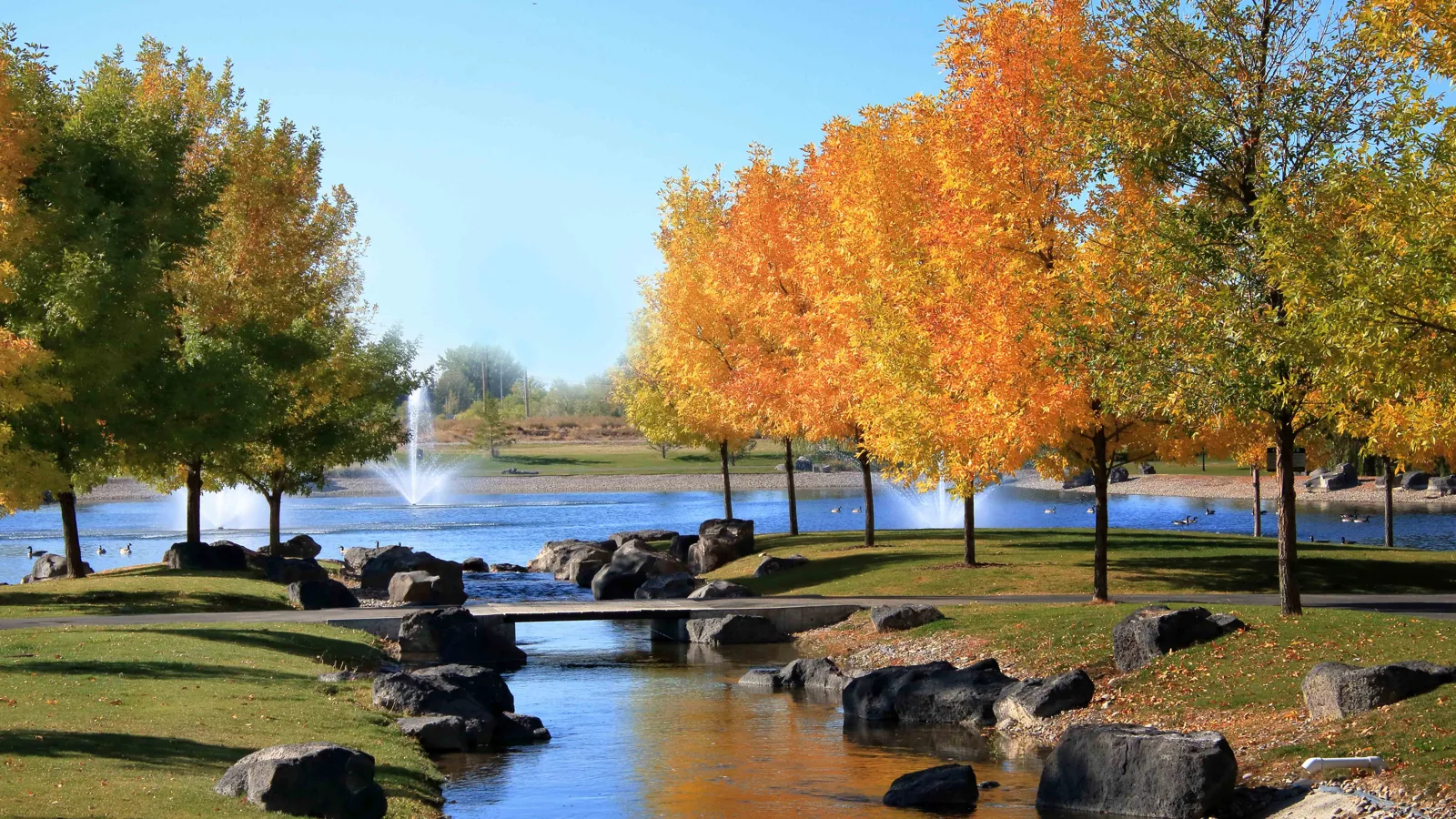
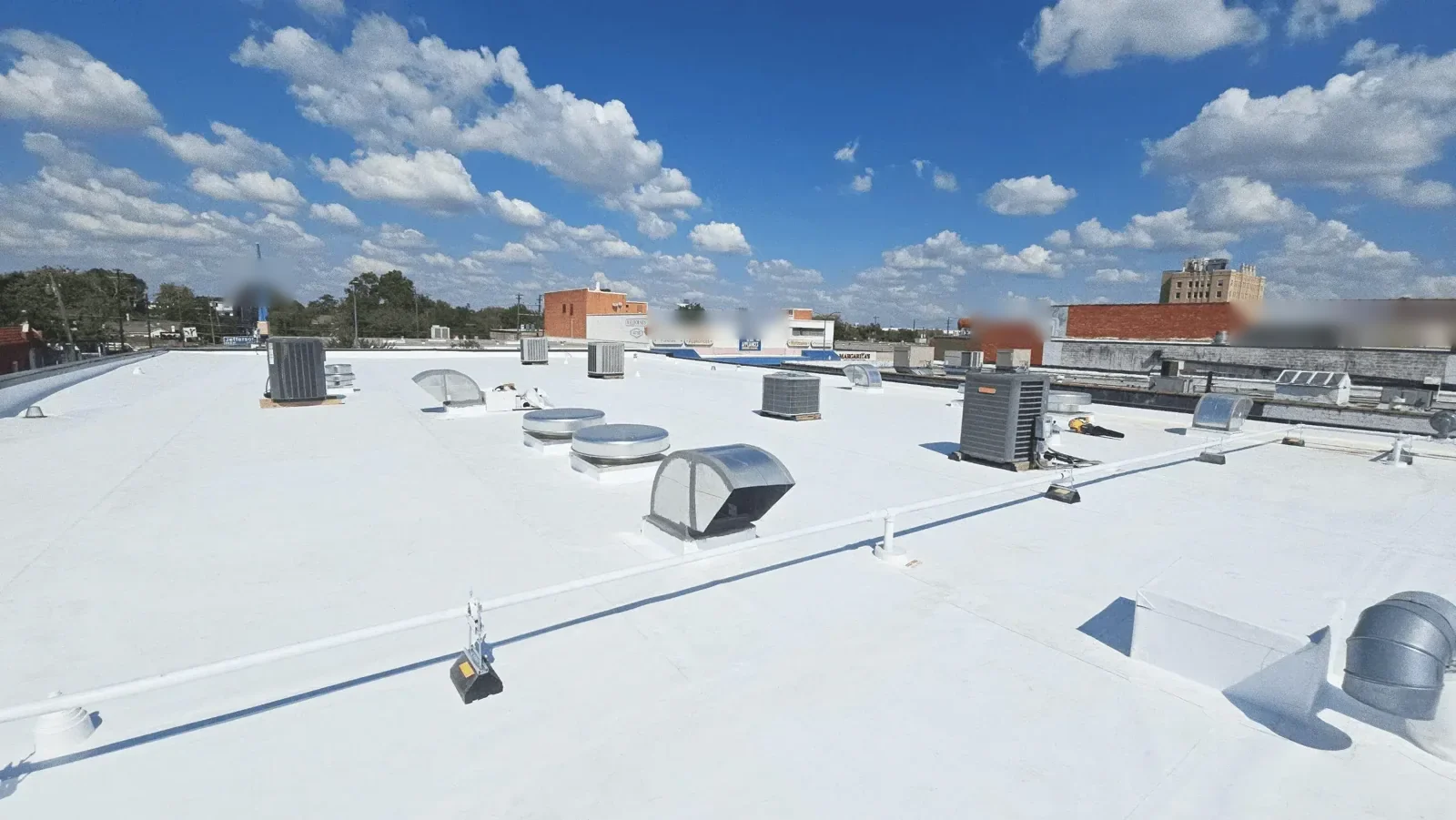
Shelley in Idaho Falls, ID

Tie Each Finding to a Roof Zone

A ceiling mark gives us a starting zone. We trace outward through seams, wall transitions, curbs, skylights, edges, outlets, and past repairs to find the roof detail needing attention. If one structure has multiple sections or additions, each gets a zone label because the attachment, slope, and drainage may differ. The report notes where the surface could not be confirmed and what would help close that gap.

A commercial roof inspection records photographs, assembly observations, and visible defects. When moisture may extend below the membrane, an infrared moisture survey can help distinguish a dry surface from a larger affected area. We state the method, area checked, and limitation so ownership can decide whether to authorize a selective opening or proceed with a bounded repair.

Shelley’s directory includes medical, assisted-living, and food manufacturing operations. The property contact identifies sensitive rooms, schedules, and protection requirements before work starts.

Coordinate Around Active Use

Roofing over an active business requires a sequence that works for the building below. We confirm entry points, delivery timing, where equipment can be placed, air intakes, and any door or service route that must remain available. If food production, medical visits, or assisted-living operations are present, the manager identifies the specific constraints rather than relying on a general property label.

An occupied-building work sequence divides tear-off into manageable areas, assigns the daily dry-in line, and coordinates handoffs with mechanical or electrical trades. If another crew changes a curb or service line, the estimate states who completes the final flashing. The property manager can then review the work order and protection steps before material arrives.

Shelley’s economy includes food processing, the Idaho National Laboratory, and potential industrial expansion. The building’s access, operations, and roof details set delivery and closure needs. A drain and scupper check can also be included when water movement is part of the reported concern.

Separate Water Entry From Interior Damage

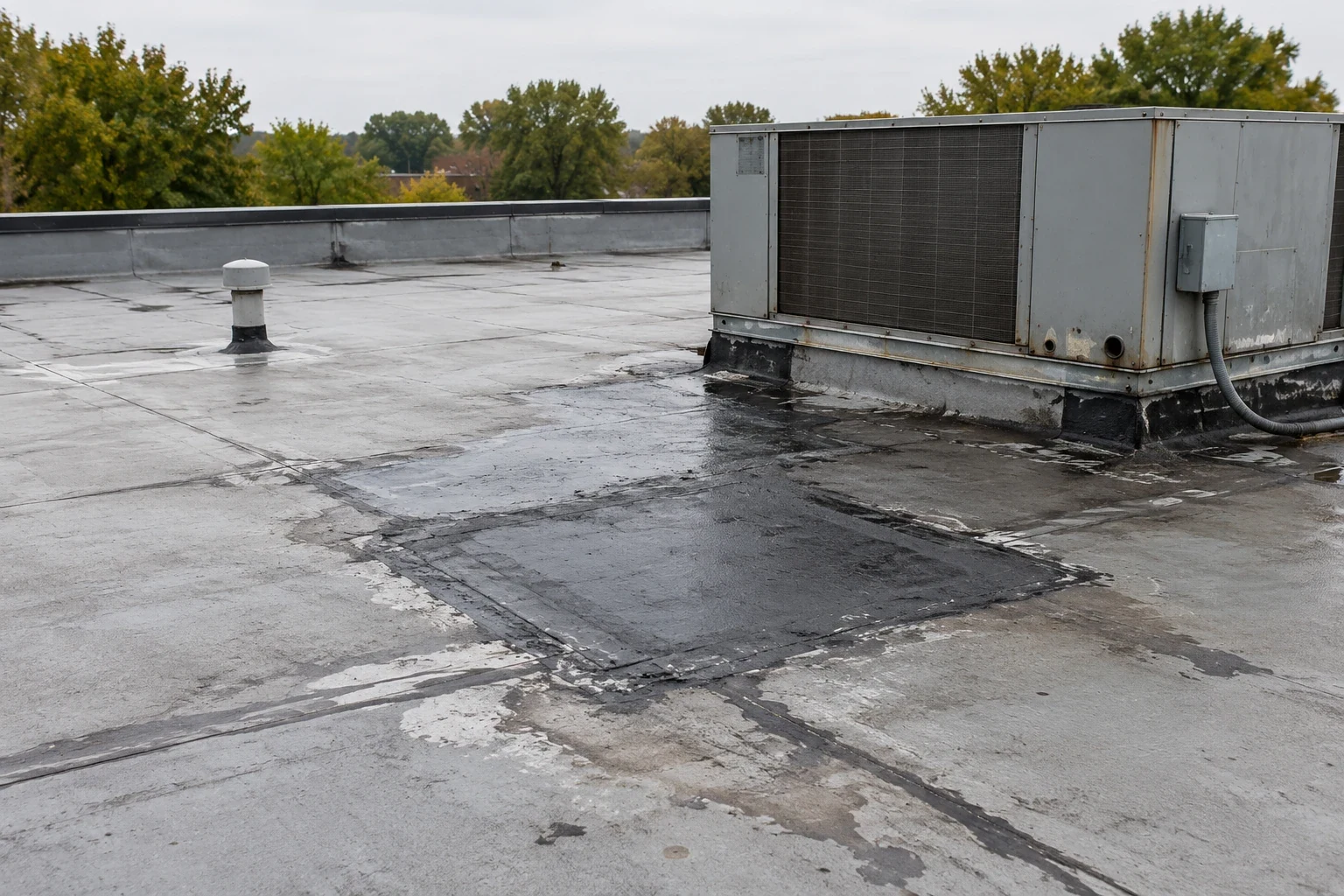
Water can move under a membrane or through insulation before it appears on a ceiling. We trace the path from the visible interior sign toward the roof detail, checking field seams, wall transitions, equipment supports, skylights, edges, and drainage. If the route remains uncertain after the visual inspection, we identify whether moisture testing or a small opening would give the needed answer.

The site contact identifies rooms and equipment needing protection during leak investigation. We keep temporary water control separate from lasting work. The leak investigation establishes a confirmed opening or records what remains unknown; it does not equate the ceiling mark with the repair area.

We inspect outlets, overflows, low spots, and adjacent membrane. A clogged outlet may call for maintenance; water that stays after clearing can point to slope, insulation, or deck conditions.

Protect the Work Through Seasonal Changes

At Idaho Falls, 14.7 days per year have a minimum at or below zero degrees Fahrenheit. That Idaho Falls figure frames winter handling; measured roof temperature governs installation. Cold can affect adhesive and membrane handling; high roof temperatures affect safe movement and application. We check actual conditions and product limits before setting the amount of roof that can be opened.

Measurable precipitation occurs on 84.3 days per year at Idaho Falls, with May the highest monthly average at 1.57 inches. These averages do not replace a forecast. Before removal begins, we specify where the crew will stop, how open areas will be protected, and which weather condition pauses work. For water entering now, emergency response is available day or night throughout the week, holidays included. Temporary containment remains separate from permanent repair.

After winter, we check seams, edge metal, wall flashing, and drains. A snow and ice roof review can record movement, trapped water, or a detail that needs further assessment. Current roof conditions and material limits set the next weather window.

Compare the Available Roof Paths

A repair stays local when the failed detail is bounded and adjoining material can take the specified connection. We inspect membrane, attachment, substrate, flashing, and drainage before deciding. Moist insulation, a soft deck, or recurring failures across separate zones can make a patch short-lived. The written finding distinguishes confirmed damage from an area that needs a test or selective opening.

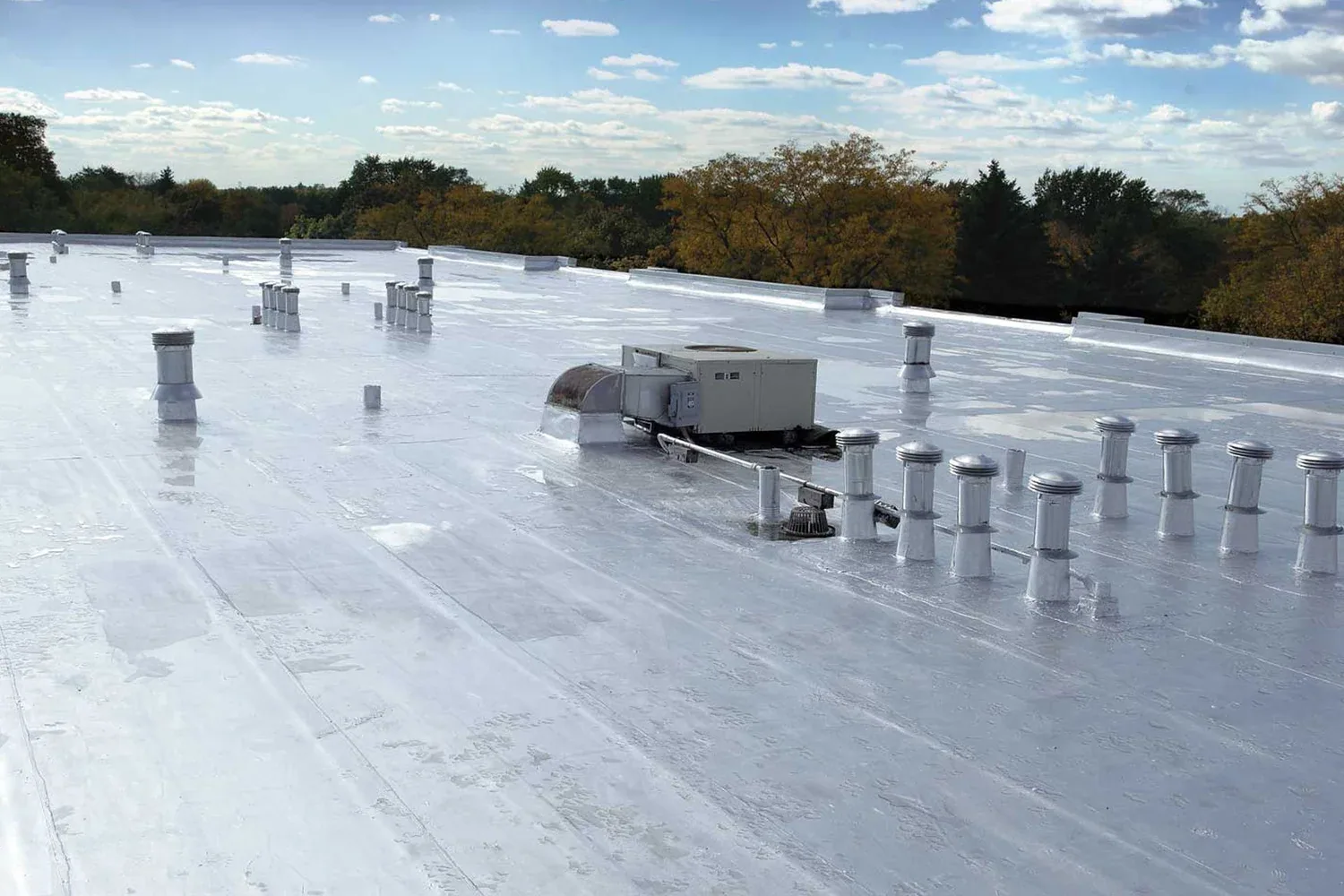
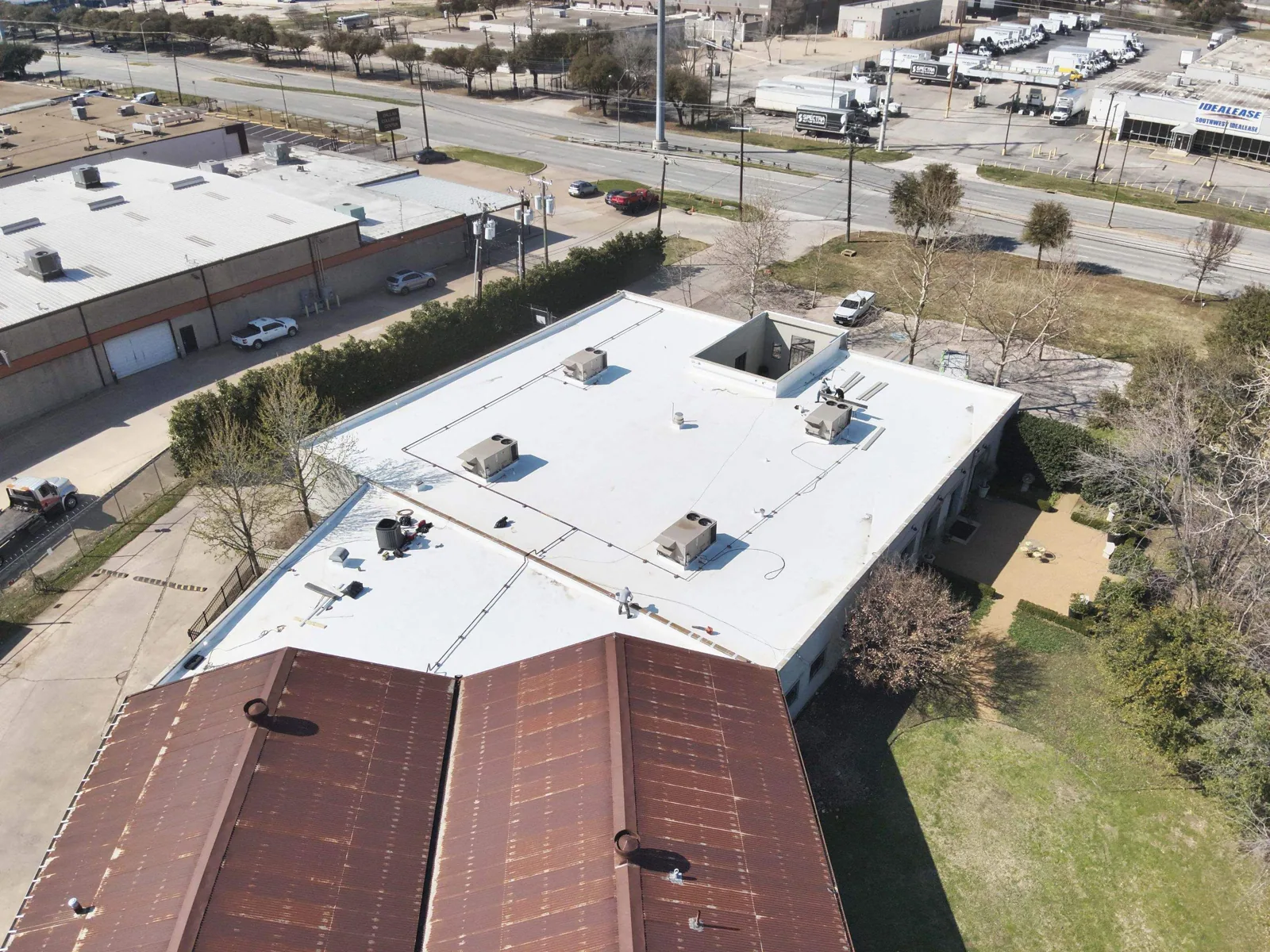
An overlay enters the comparison after moisture, attachment, substrate, and system compatibility have been checked against project limits. The recover review compares that route with removal and deck access. If replacement is selected, a commercial replacement scope identifies the system, insulation, perimeter, penetrations, drainage, and approval process for concealed conditions. Coating needs a compatible surface and sound substrate after preparation.

Cost and timing reflect removal depth, insulation or deck work, detail count, equipment, access, staging, disposal, and weather. We separate defined work from concealed-condition allowances so ownership can compare options using observed conditions.

Leave a Useful Condition Record

Closeout should identify repaired zones, materials used, photographs, areas left in service, and questions that remain open. If access prevented a full review, the limitation belongs in the record. A maintenance visit can return to exposed seams, penetrations, edges, and outlets on a schedule suited to the actual assembly and property operations.

Shelley’s ties to Idaho Falls and agriculture describe the municipality. A separate project in Rigby or Blackfoot is a distinct location with its own roof and access. Its record stays separate from Shelley.

The scope sets a daily closure point and approval process, giving ownership a basis for maintenance or capital planning from the inspected building’s condition.

Questions About Shelley

It tells us to confirm operations, not to assume a particular control. The site contact identifies sensitive rooms, air intakes, production timing, and equipment that needs protection. We use those details to set work zones and the daily closure limit.

It can help identify temperature patterns consistent with retained moisture, but a survey is not the same as opening the roof. We explain its coverage and limitations, then recommend a selective opening only when it would answer a specific assembly question.

Water can travel below the membrane or through insulation before reaching the interior. We follow the likely drainage path across seams, transitions, curbs, and outlets, then document the repair boundary separately from interior damage.

The current forecast, roof-surface moisture, temperature, wind, and installation instructions determine whether the assembly can be opened and secured. Idaho Falls climate averages provide seasonal context only.

We check whether the defect is isolated, whether adjoining material and the deck remain sound, and whether moisture extends beyond the opening. The estimate then compares a compatible repair with recover or removal, listing the work and concealed-condition process for each.

ServicesRoof SystemsIndustriesProperty TypesService AreasDamage RepairCapabilitiesManufacturersContactAboutRequest a Roof Assessment555-555-5555
Call us today555-555-5555