Government Building Roofing in Idaho Falls, ID Serving Idaho Falls & Eastern Idaho

Coordinate government building roofing in Idaho Falls around public access, occupied offices, drainage, code review, and documented repair scopes.

Government Building Roofing in Idaho Falls, ID

Government Building Roofing

A public roof in Idaho Falls faces deep cold as well as hot summer days. Minimum temperatures reach zero or below on 14.7 days in an average year, which can narrow safe access and material application windows. We inspect the assembly, trace water reports, and define a work zone that preserves essential entrances and service routes as much as the roof condition allows.

Government offices in the region serve residents, businesses, health programs, and county functions. Idaho Falls includes the Idaho Department of Health and Welfare District 7 among its institutional presences, while Rigby is the Jefferson County seat with a growing downtown commercial center. We confirm the building’s roof assembly, public access routes, security rules, and staging limits with the facility contact. We confirm public hours, restricted areas, security procedures, and rooftop equipment with the facility contact.

The scope records observed membrane or metal conditions, drains, curbs, wall transitions, and interior signs. We separate immediate water control from permanent repair, note any area requiring testing, and identify the owner decision needed before the boundary changes. That gives a public facility manager a record for maintenance and budget review.
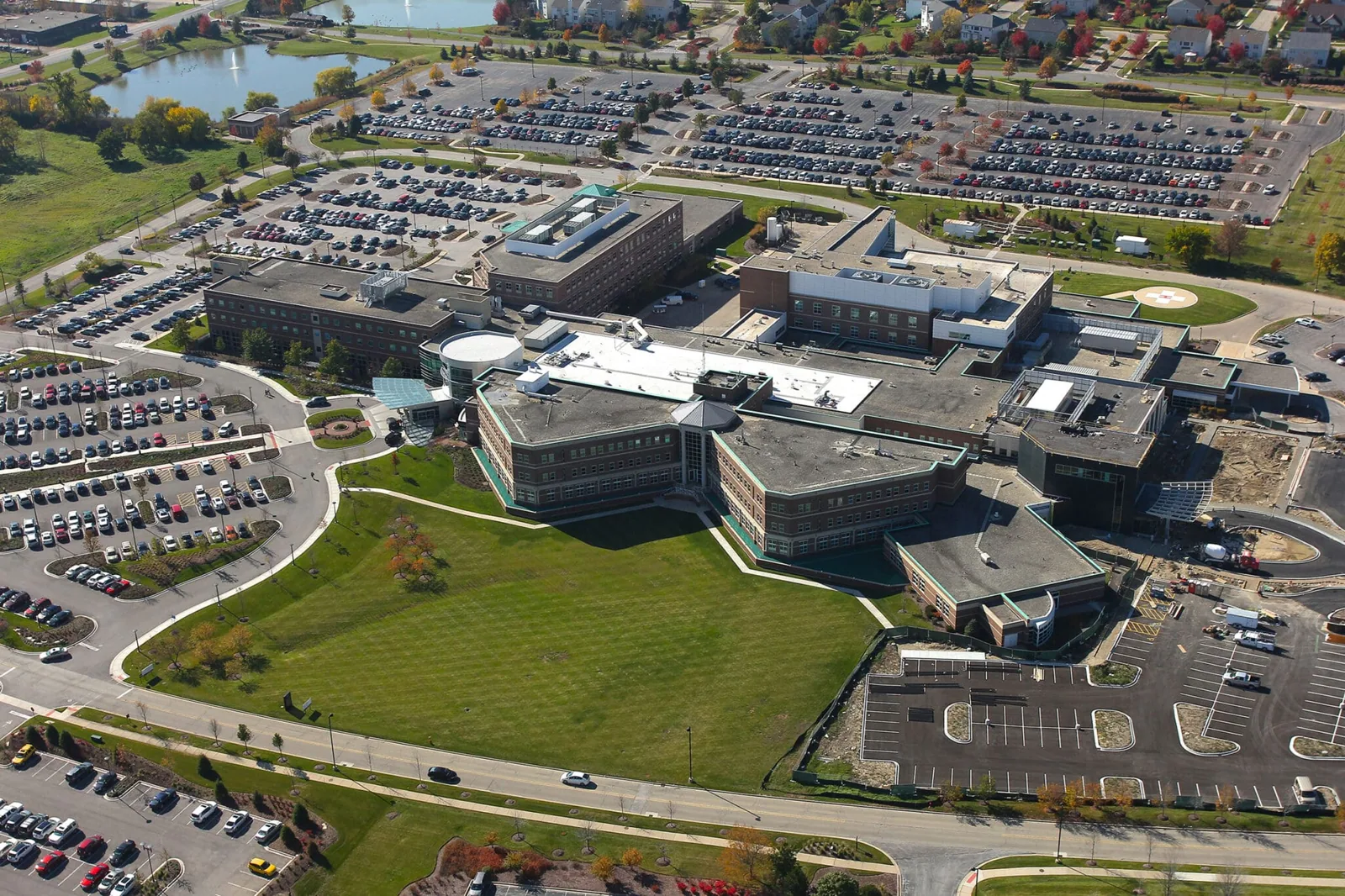
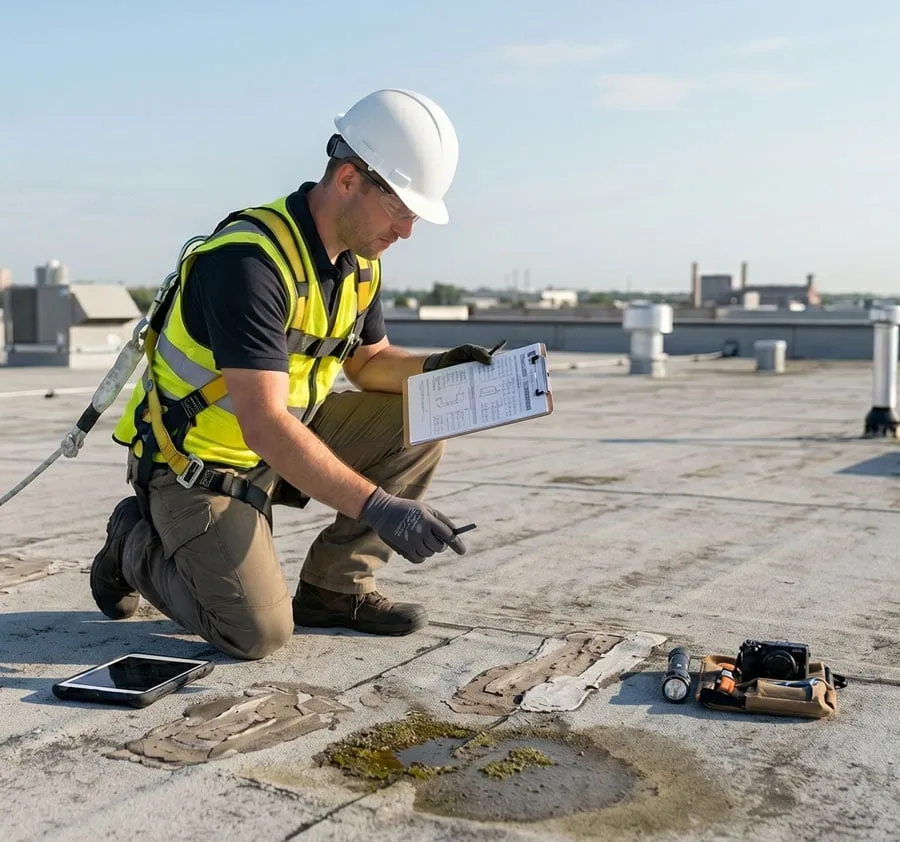
Government Building Roofing in Idaho Falls, ID

Keep Public Access Legible

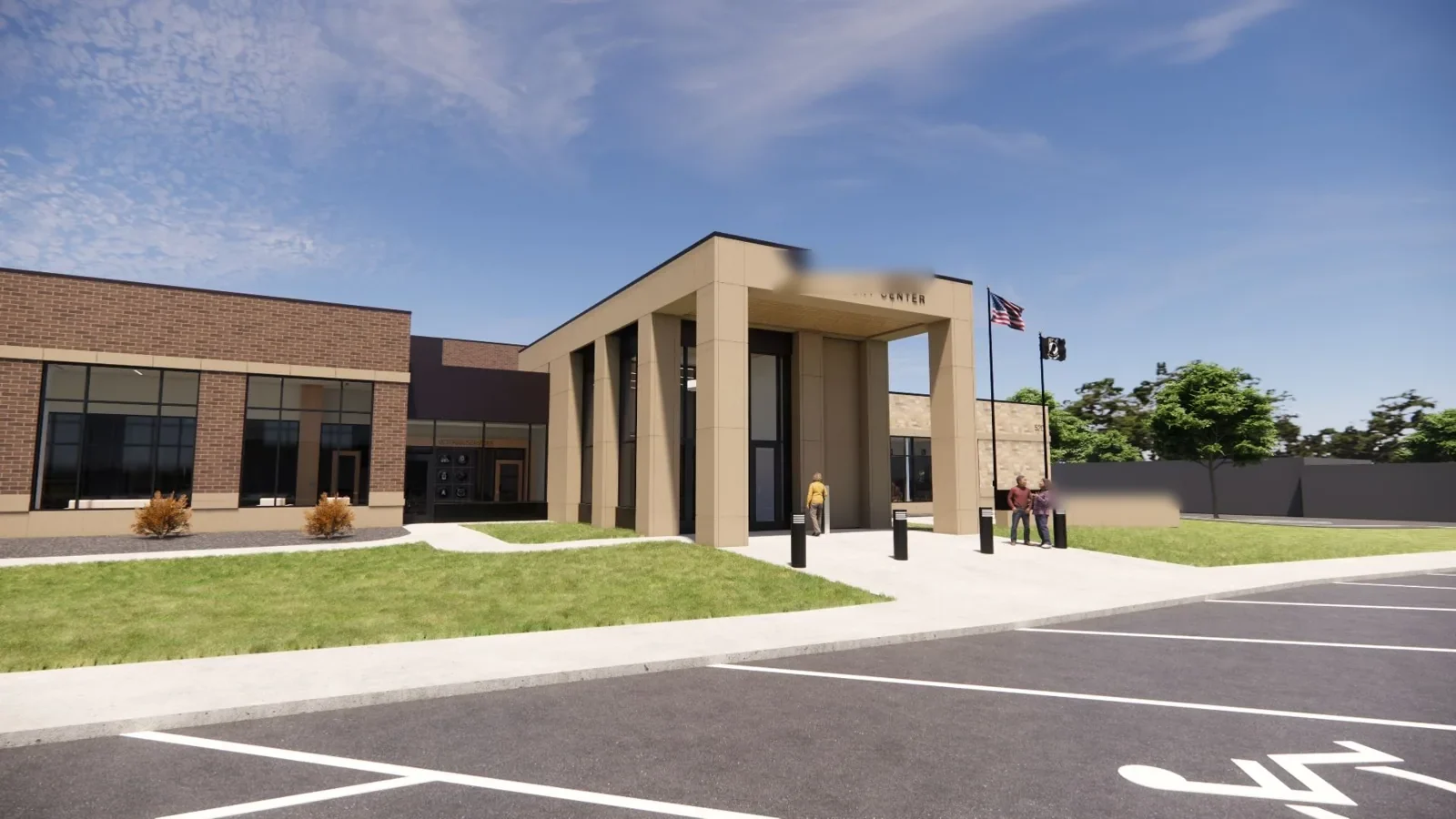
Before materials arrive, staff identify public entrances, service counters, accessible routes, loading areas, air intakes, and spaces where confidential or secure activity must remain separated. We plan lift placement and debris movement around those boundaries. A temporary path is useful only if it remains clear, signed, and coordinated with the person responsible for the building.

An occupied-building reroofing sequence can define daily work limits, notices, interior protection, and who approves a route change. Each phase ends at a roof boundary the crew has prepared, dried in, and checked before leaving the building. If concealed deck damage changes the work, the finding and added scope go to the designated approver before that section is covered.

Idaho Falls also has a Warehouse District where Broadway and Maple have storefronts while nearby corridors include warehouse and light-industrial uses. A public building near downtown may need delivery and staging coordinated with nearby access. The facility's own circulation needs set the route, so we confirm access before assuming an entrance can be blocked.

Record the Roof Condition by Area

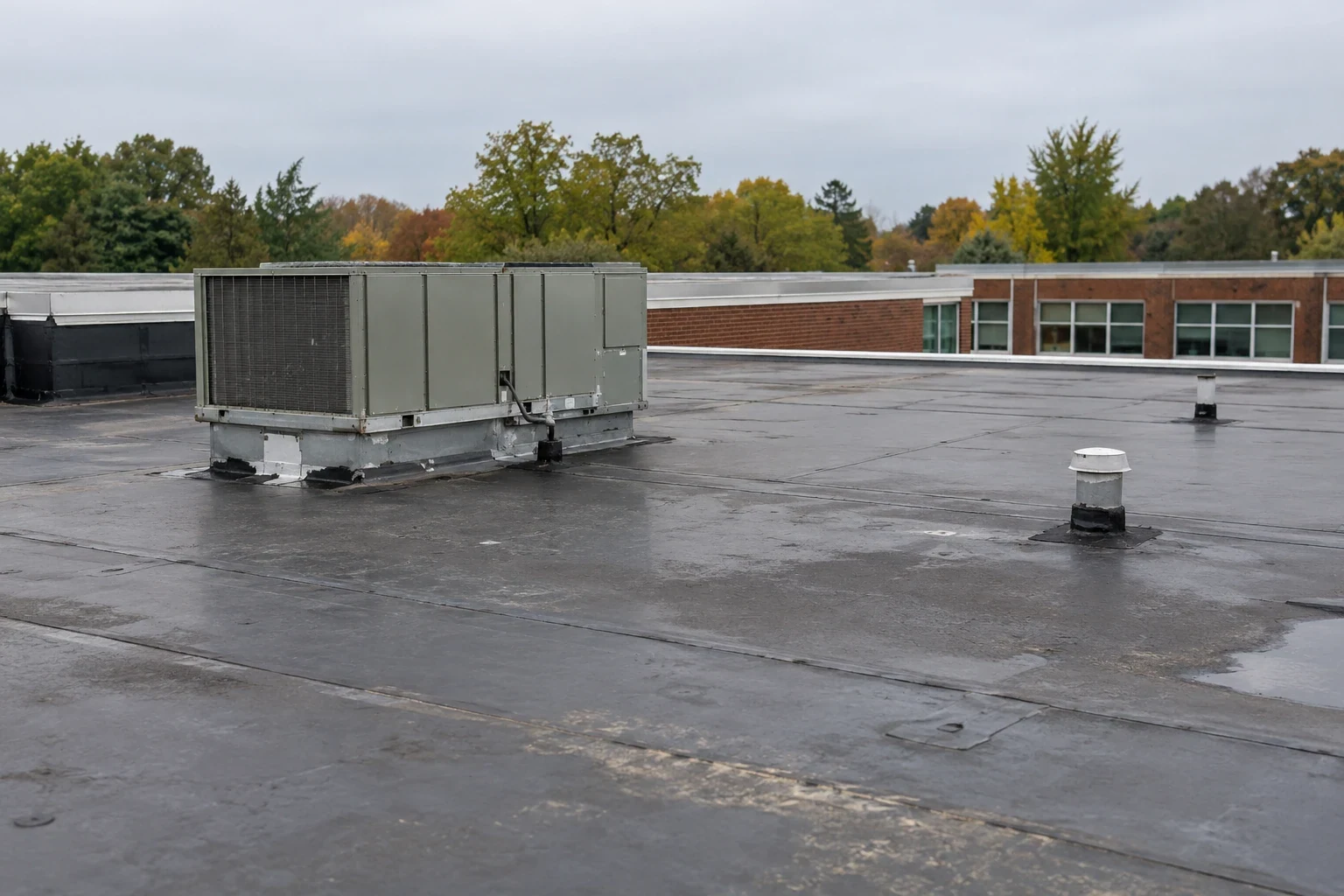
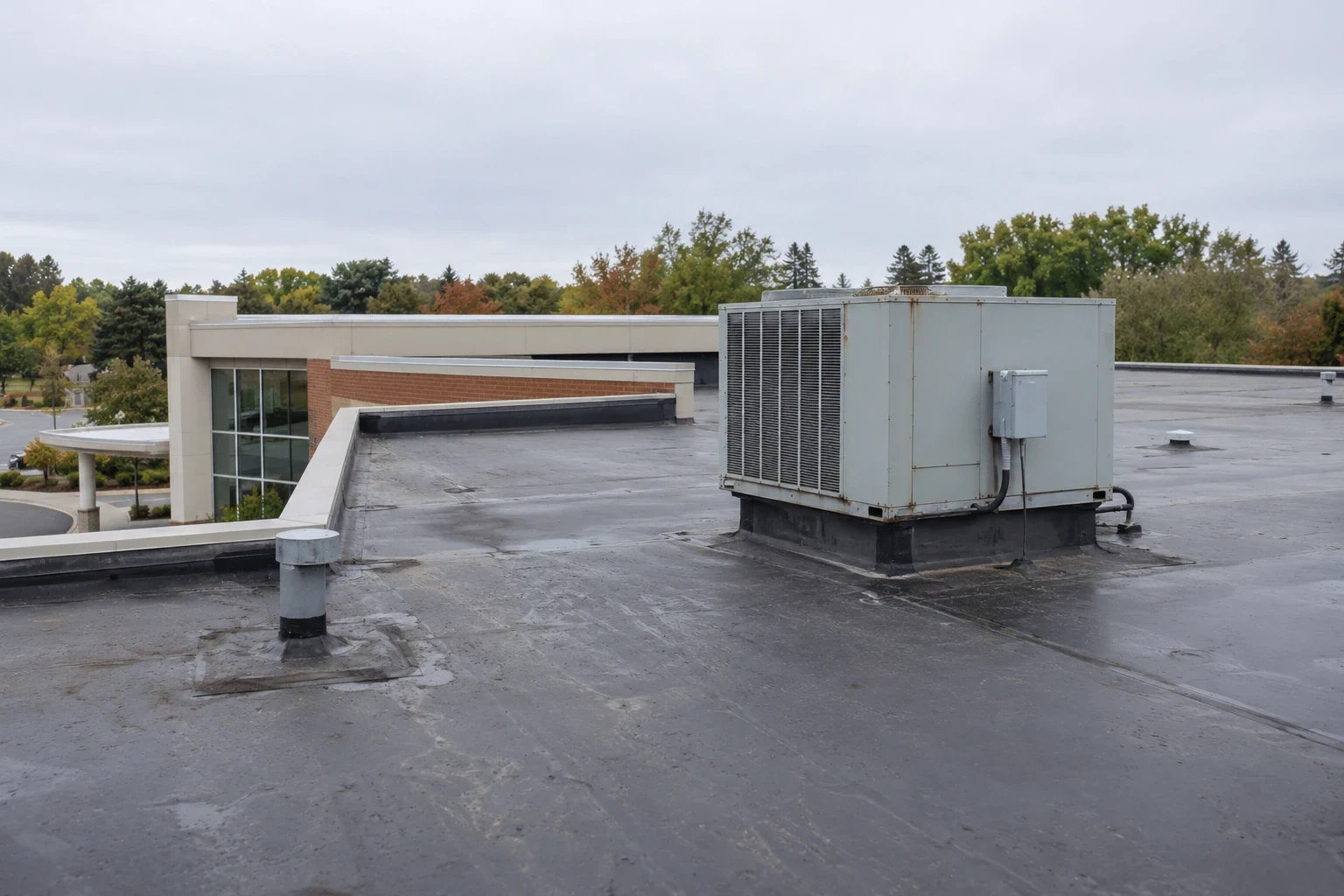
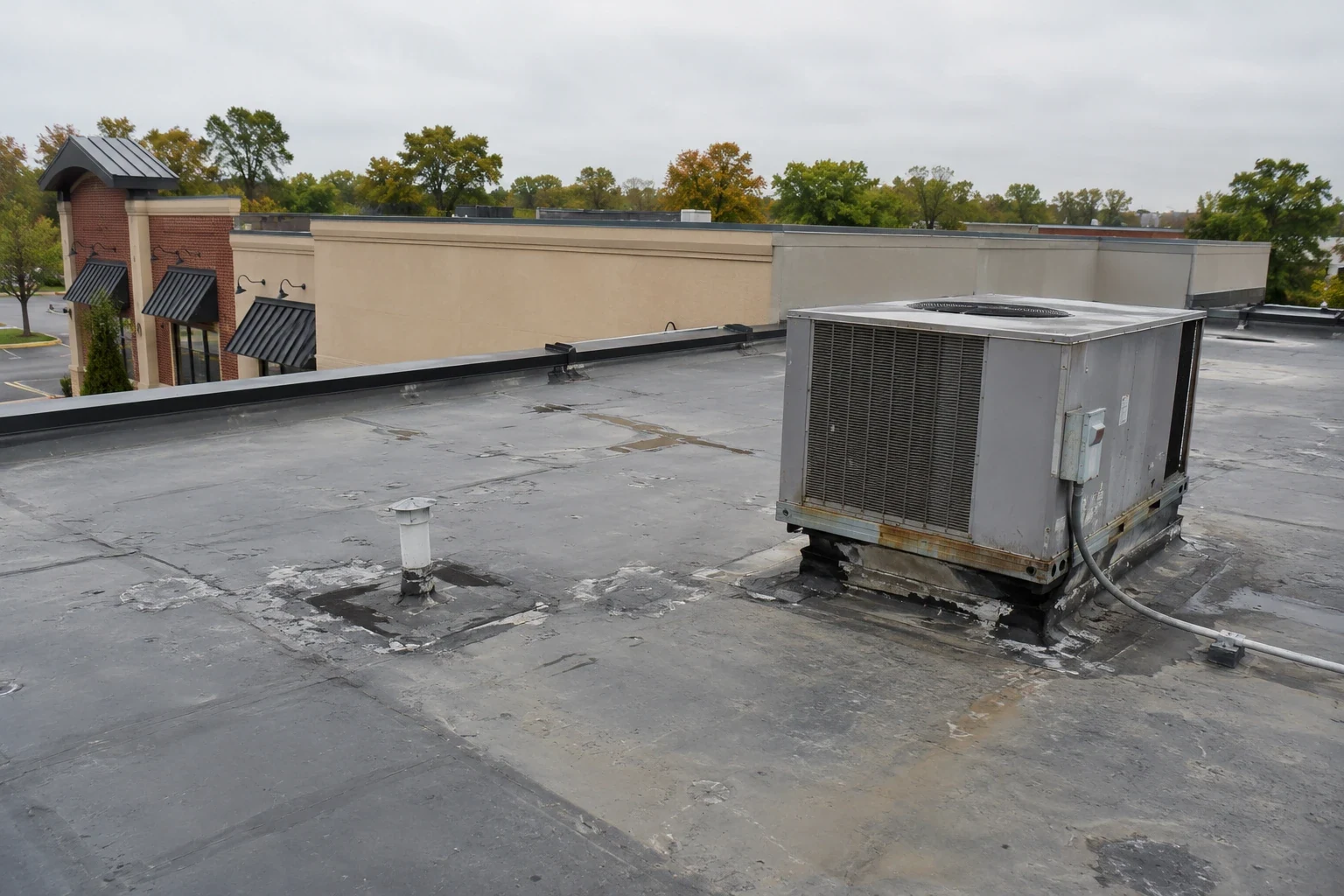
Public buildings may have additions, different roof elevations, mechanical penthouses, skylights, and multiple drainage areas. We identify the assembly and inspect seams, metal edges, penetrations, curbs, and terminations. Interior reports help locate a likely path, but water can move along a deck or insulation before appearing below. We connect the interior sign to roof evidence and label any part that remains unconfirmed.

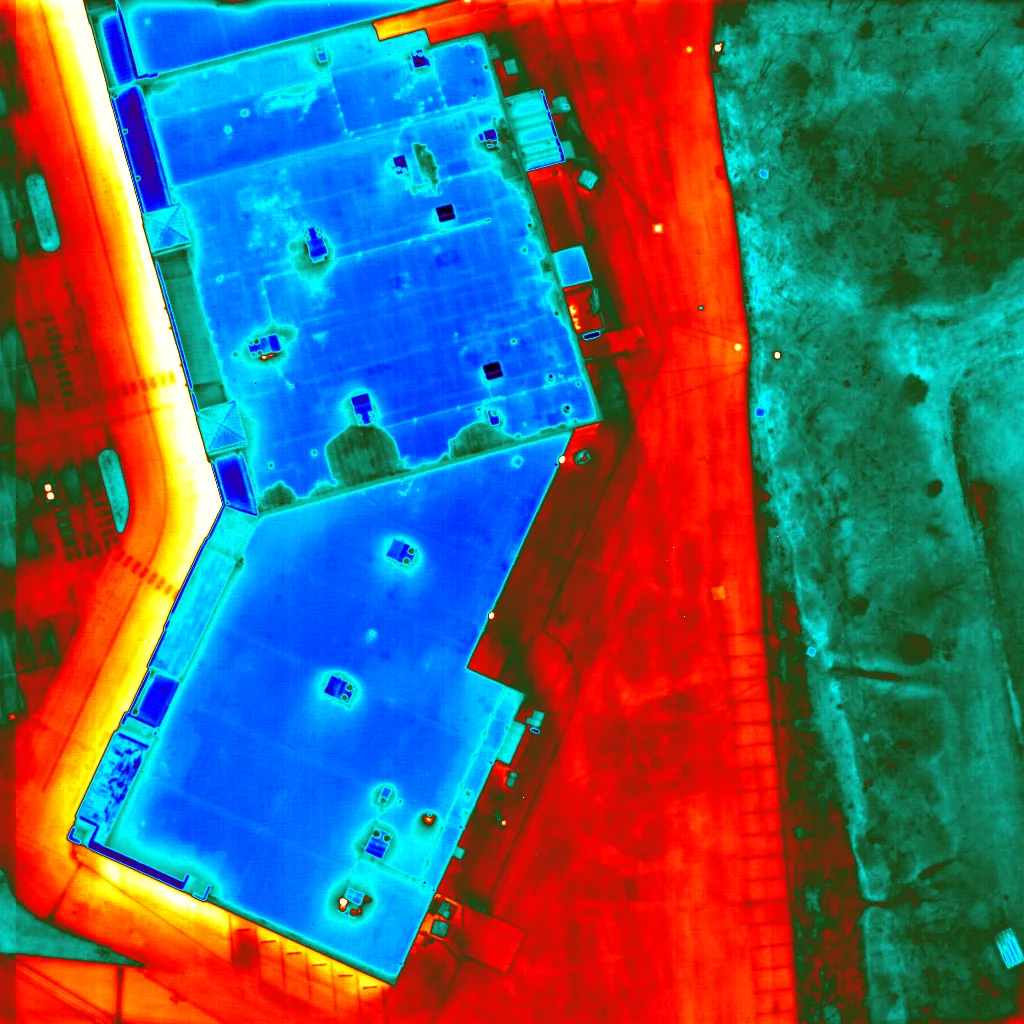
For suspected moisture beneath a membrane, infrared moisture mapping can help target checks under suitable conditions. A commercial roof inspection documents visible conditions, while selective openings can confirm material condition before repair. We state which readings support removal and which sections could not be accessed.

Drainage receives a separate review. A blocked outlet, damaged bowl, or failed scupper can keep water against an otherwise repairable membrane. We check the low point, outlet connection, overflow path, and nearby flashing, then include the appropriate correction in the scope. This addresses the water path, not just the interior symptom.

Confirm Requirements for the Scope

Idaho adopted 2018 building and existing-building code editions, plus the Idaho Energy Conservation Code. The authority having jurisdiction determines which provisions apply to the proposed roofing scope. We describe the roofing work, existing assembly, and proposed changes so the facility team can coordinate its review before construction.

In Rexburg, the North Interchange District includes government, commercial, industrial, residential, and retail uses across a multi-jurisdictional area. For Rexburg North Interchange projects, jurisdiction and property requirements need confirmation with the appropriate facility contact. We inspect the assembly and coordinate project review with the building owner and design team before setting scope.

Set Work Limits for the Forecast

Roof temperature and product limits matter in both deep cold and summer heat. The facility team and roofing lead check current surface and forecast conditions before setting the day's work area.

About 15 annual overnight lows in Idaho Falls reach zero or below. That cold can limit roof access and some materials. We check the current forecast and substrate before choosing an open area, then identify what cannot be inspected safely if ice or snow covers a detail.

Public hours, permit review, material delivery, equipment coordination, and concealed conditions can also move the schedule. We list those dependencies and the owner decision point. A safe pause matters when the roof or public schedule changes.

Compare Repair, Recover, and Replacement

A defined seam or flashing defect may support repair when nearby material is sound. Broad wet insulation, weak attachment, deck deterioration, or recurring leaks can indicate a larger scope. Adding another roof layer requires a dry, stable base, sound attachment, and approval under the project requirements; otherwise the scope addresses removal and correction. We explain the observations behind each option and identify testing that could change the recommendation.

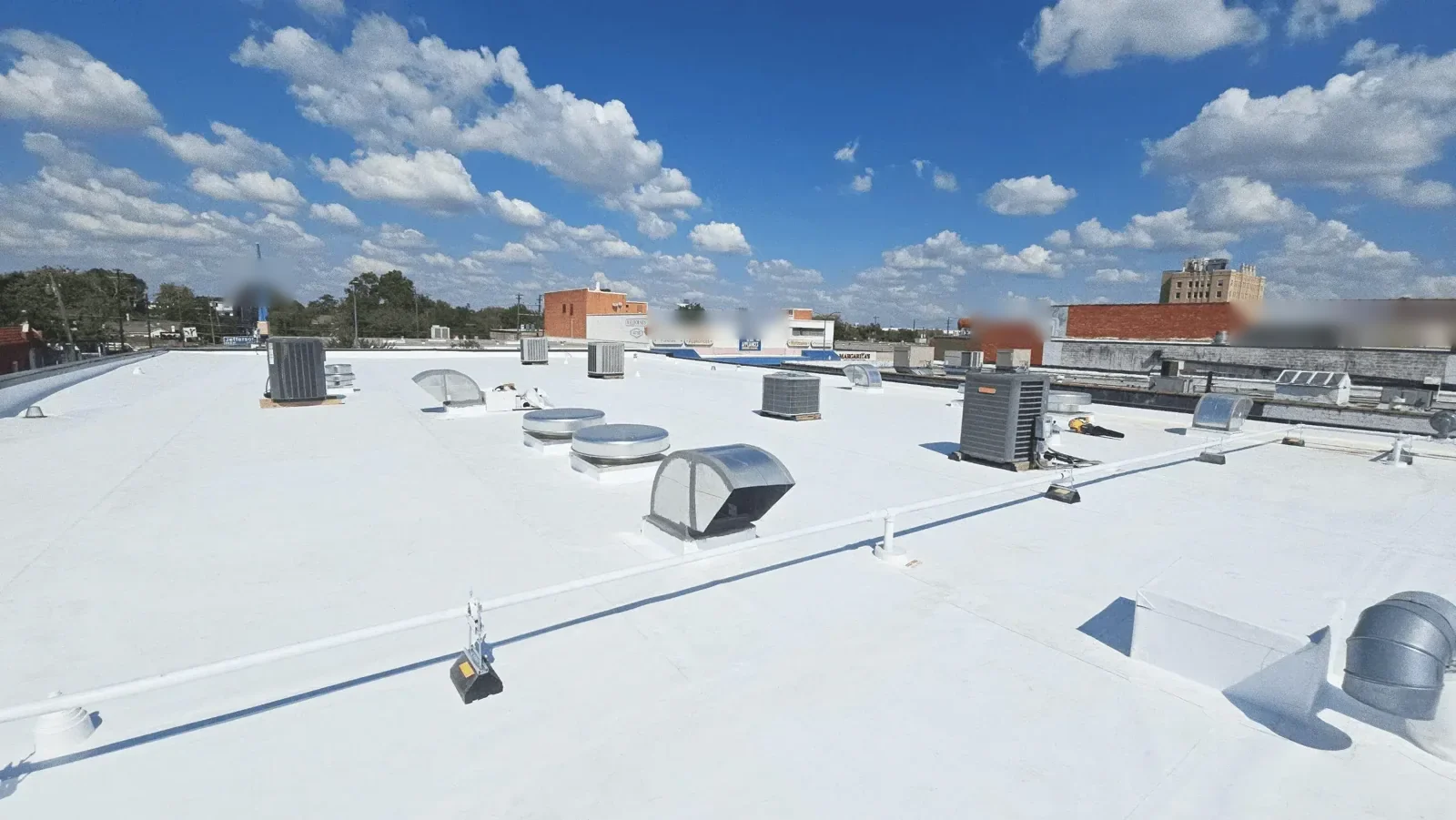
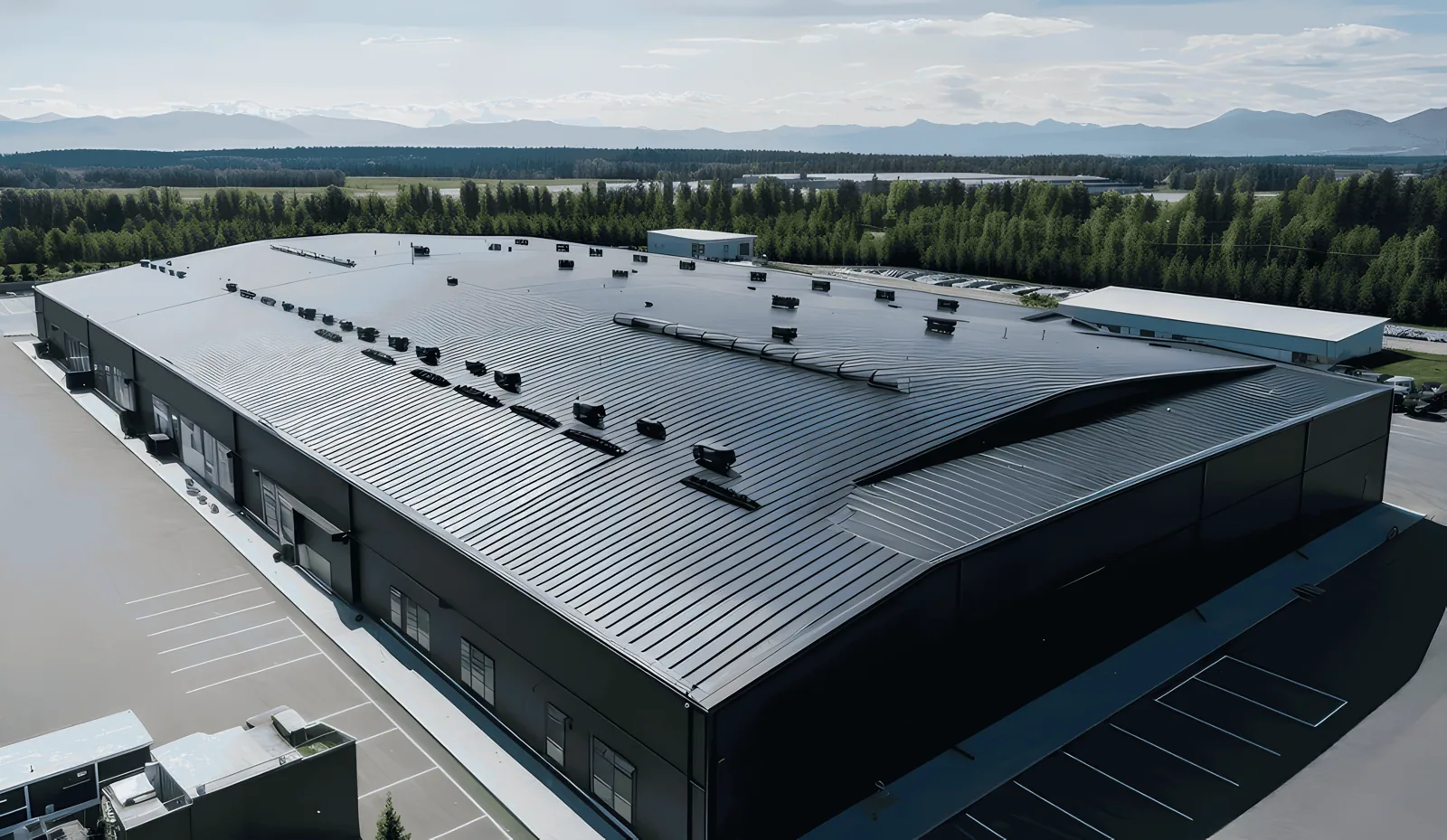
A standing seam metal system or a low-slope membrane has to suit the structure, drainage, penetrations, and future service access. Inspect the installed system and surrounding layers to compare a targeted patch with replacement or additional testing. For school roofing or hospital roofing, access plans differ from government offices, but each property's assembly and occupied areas still determine the work sequence.

Where the roof remains serviceable, preventive maintenance can track drains, exposed flashing, and prior repairs. If water entry is active, commercial roof repair can address a defined defect while capital planning continues separately.

Leave a Clear Closeout

Cost drivers include removal depth, roof height, wet insulation, deck work, edge metal, drain repairs, and staging. Access control and interior protection can affect labor sequence. We separate known conditions from concealed-condition allowances, state what is included, and identify how the owner approves an added repair. This makes scope comparisons easier to carry into a public budget review.

A roof condition report can preserve photos, marked zones, completed repairs, and unresolved areas. The closeout notes inaccessible areas and follow-up needs. Records for facilities in Idaho Falls and Rigby keep each building's condition distinct.

If urgent water control is needed, we document its limits separately from permanent repair. The facility lead receives completed areas, materials, drainage corrections, and follow-up items for the next budget review.

Questions About Government Building Roofing

We coordinate public routes, accessible access, staging, lifts, and notices with the facility contact before work begins. The sequence identifies which entrance stays open and how any change will be communicated. Roof conditions and safe access determine the size of each daily work area.

A useful record identifies the roof assembly, observed defects, moisture limits, photos, drainage, repair boundaries, and unresolved questions. We separate urgent water control from permanent work and note allowances for concealed conditions. That gives the request a scope the owner can compare and approve.

They can depend on the existing assembly, project scope, and authority review. We document the proposed roofing work and coordinate the applicable adopted requirements with the facility team. A repair and a full replacement may raise different review questions.

Occupied work proceeds when access, interior protection, staging, weather, and daily closeout support the sequence. We set boundaries with the facility contact and identify who can approve a change. If a concealed condition prevents secure closure, the sequence pauses at the stated stop point.

Repeated leaks, widespread wet insulation, poor attachment, deck damage, or failures at several details may point beyond one patch. We inspect the surrounding assembly and use testing where needed. The scope explains whether the evidence supports a repair, recover, or replacement discussion.

ServicesRoof SystemsIndustriesProperty TypesService AreasDamage RepairCapabilitiesManufacturersContactAboutRequest a Roof Assessment555-555-5555
Call us today555-555-5555