Multi-Site Commercial Roof Programs in Idaho Falls, ID Serving Idaho Falls & Eastern Idaho

Coordinate commercial roof inspections and repairs across Idaho Falls properties with consistent records, site-specific scopes, and budget priorities.

Multi-Site Commercial Roof Programs in Idaho Falls, ID

Multi-Site Commercial Roof Programs

A multi-site roof program gives ownership one way to organize inspections and repair decisions without treating different buildings as the same asset. Idaho Falls includes a connected Downtown and South Downtown core, the mixed-use Snake River Landing district, and industrial areas. Those settings bring different access and operating needs, while each roof still has its own assembly and condition. Idaho Falls transitions from a long freeze season to warm summer roof conditions. That local pattern can frame seasonal planning, but the site forecast and roof system set actual work conditions. We coordinate a property list, inspection sequence, record format, and follow-up process so facilities teams can see what was inspected, what needs attention, and what remains open.
Multi-Site Commercial Roof Programs in Idaho Falls, ID

Set a Common Method for Every Property

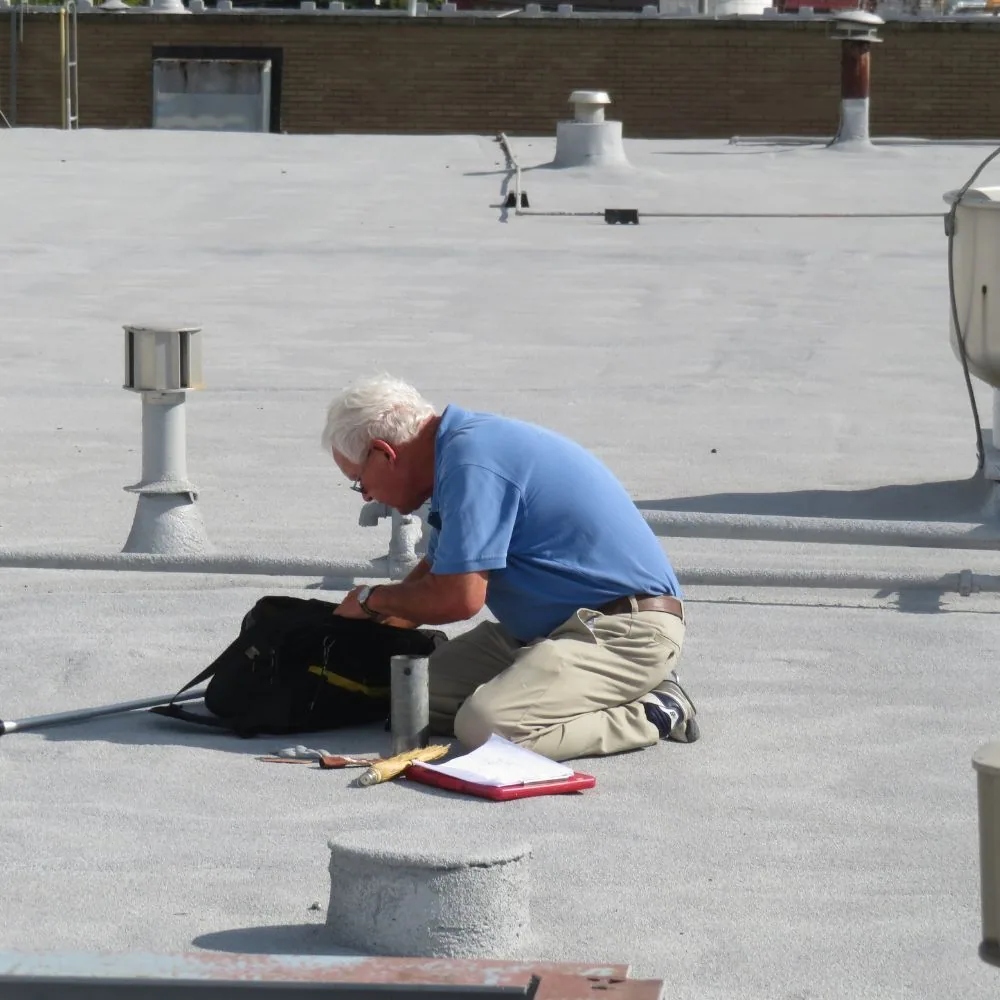
Before the first visit, we confirm the buildings in scope, contact for each location, roof access rules, known issues, and the records ownership has available. A shared form can capture system type, roof zones, drains, penetrations, prior repairs, interior reports, photos, and access limits. Those fields make records comparable without forcing one roof description onto another.

Grouping visits by area or operating calendar can reduce duplicate setup; repair priority follows water risk, roof condition, access, and building use. A property with active water entry may need a separate response from a scheduled survey day. A building along the Hitt Road and 25th South corridor may have roadway access considerations, while Downtown properties may need coordination around storefront or service access. We confirm each site’s operating requirements directly with the manager.

The roof asset management record can hold inspection history and open actions. A condition report provides dated findings and images for each property. The program standardizes the method; the building inspection establishes the actual condition.

Build a Practical Inspection Sequence

Inspection frequency should follow the roof condition, prior repairs, drainage, building use, and any written maintenance requirement. We can set a planned review cycle and flag when new leaks or construction should prompt an earlier visit. After each inspection, the record shows areas reached, findings, recommendations, and limitations so the next visit begins with an accurate handoff. A route sheet can list the site contact, roof-access procedure, active work zone, and follow-up owner. At the end of the cycle, we return a location-by-location status so the portfolio manager can see which inspections are complete and which decisions remain pending.

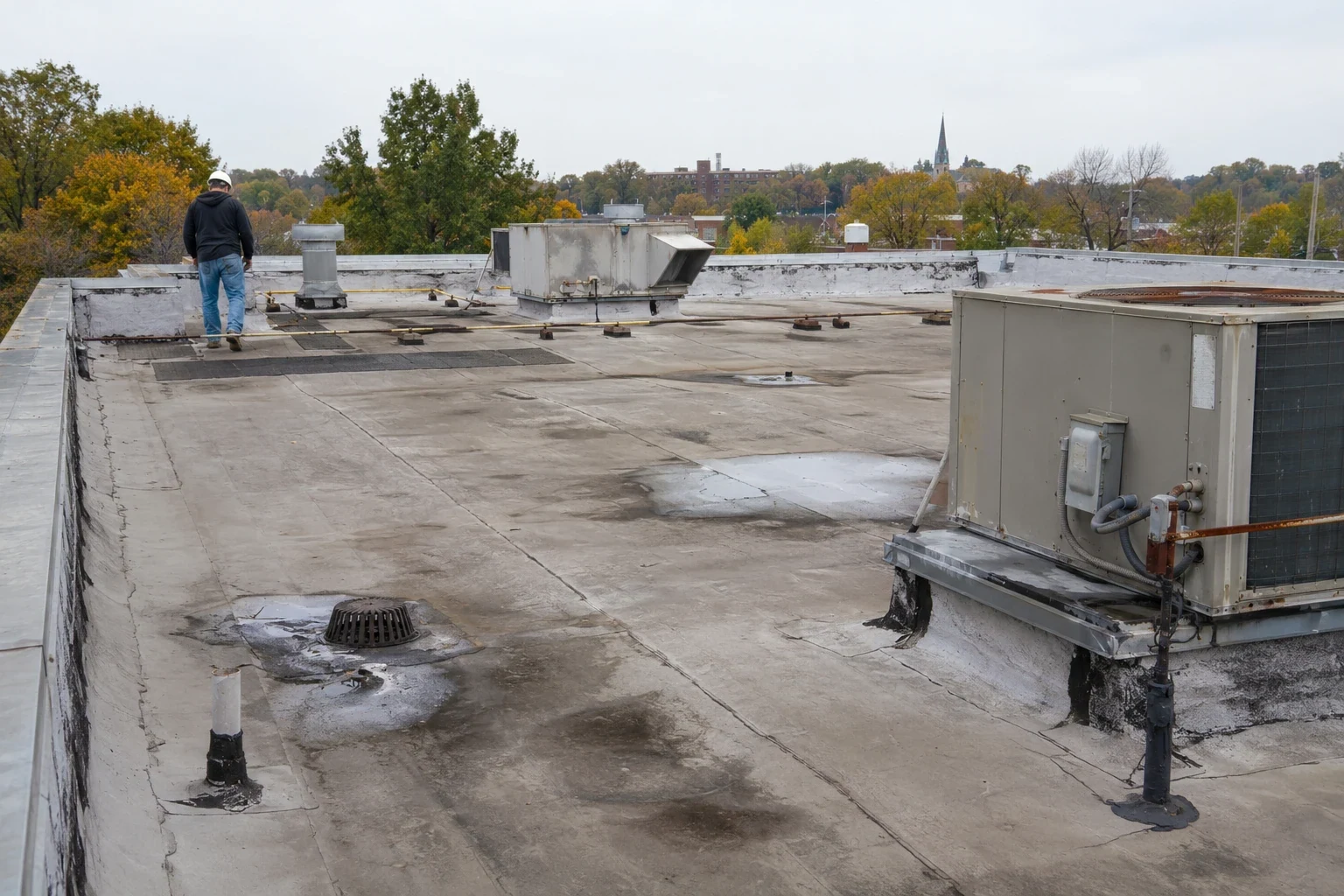
Idaho Falls averages 84.3 days each year with measurable precipitation. Seasonal precipitation makes drainage checks useful before the wetter spring period. We review the current weather and roof conditions before opening an assembly. A roof inspection can check seams, drains, edges, and penetrations, while scheduled maintenance can address accessible debris and exposed details.

Properties may sit in different jurisdictions. Rexburg’s North Interchange plan spans Rexburg, Madison County, and Sugar City and contemplates a mix of industrial, commercial, residential, retail, and government uses. That broad district description illustrates why access and project coordination should be confirmed property by property, rather than inferred from a single municipal contact.

Route Urgent Conditions Without Losing the Plan

A portfolio schedule should not delay emergency water control. When a leak or opening is reported, we confirm the affected location, access contact, interior risk, and roof conditions before assigning the repair scope. Urgent roofing calls can receive response at any hour, including weekends and holiday periods. The service record captures the temporary measure, limits on access, and permanent work that remains.

After a response, the event should update the program log. The repair location, materials, photographs, and remaining observations belong with the building, not in an unassigned email thread. The manager can then see whether a recurring leak relates to a prior repair or is a new roof condition. If the issue requires moisture testing, the survey scope can identify areas for selective verification.

For urgent work, access or weather may restrict what can be completed. We document what was secured and what is still exposed, and coordinate the return step with the location contact. That record returns the property to the planned inspection cycle after the immediate condition is handled.

Compare Work Across the Portfolio

Ownership can sort findings by urgency, condition, work type, budget period, or operating consequence. The comparison is strongest when each finding retains its own photos and reason for priority. A shared severity label should not hide whether the issue is an active leak, deteriorated flashing, ponding, wet insulation, or an inaccessible area that needs another visit.

Repair cost drivers include roof system, access, area, material compatibility, substrate, equipment, and interior protection. Replacement planning may also involve removal depth, drainage, insulation, and tenant or production phasing. We separate repairs that can be grouped from work that must stay site-specific. The capital planning review can organize proposed work and timing, while replacement planning can define a larger scope where condition supports it.

A property in the Snake River Landing service area and one in the Rexburg North Interchange district can appear on one program calendar while keeping separate inspection records. We set the sequence from access and operating constraints, then compare each roof’s condition and budget on its own.

Keep Actions and Records Moving

A program needs an owner for each next step. The report can assign a property contact, action, target period, and whether approval or testing is needed. Completed items close with a dated note and photograph; open recommendations remain visible until ownership decides what to do. This avoids presenting a repair as complete when only temporary protection was installed.

When a building changes managers or tenants, access notes and roof history should move with the property file. We can organize a portfolio export with building, roof zone, system information where known, inspection date, open issue, and recommended next action. The owner can then use the same record to coordinate facilities staff, contractors, and capital planning.

Idaho Falls averages provide context for seasonal inspection planning, but current roof condition and operating requirements drive the task list. We review the program as findings change, update priorities after repairs, and identify the locations that need further investigation. The result is a working roof schedule, not a promise that every building will need the same work.

Questions About Multi-Site Commercial Roof Programs

Yes. We can plan a route and shared reporting method across included buildings, subject to each site’s access, use, and schedule. Findings remain separated by property and roof zone so a shared visit does not blur condition differences.

The property manager reports the location and access contact for emergency response. We document temporary water control and permanent repair needs, then update that building’s record so the event does not disappear from the portfolio plan.

The program can use common fields and a consistent sequence, but the actual inspection follows the roof system and site conditions. A metal roof, membrane roof, and roof with restricted access require different observations.

A consistent format helps compare urgency, work type, and budget needs. The report should retain local access, condition, and operating context for each property rather than treating one location’s findings as a proxy for another.

We add the work area, materials, photographs, and remaining recommendations to that location’s record. The completed action can close while other roof findings remain open for later review.

ServicesRoof SystemsIndustriesProperty TypesService AreasDamage RepairCapabilitiesManufacturersContactAboutRequest a Roof Assessment555-555-5555
Call us today555-555-5555