KEE Roofing in Idaho Falls, ID Serving Idaho Falls & Eastern Idaho

Assess KEE roofing in Idaho Falls through the specified membrane, seam and flashing condition, drainage, and assembly limits before planning roof work.

KEE Roofing in Idaho Falls, ID

KEE Roofing

Cold roof mornings and hot summer afternoons both affect KEE seam work in Idaho Falls. Product identification and installation limits matter before we set a repair, recover, or replacement scope. We inspect the existing membrane, insulation, and drainage before recommending a repair, recover, or replacement.

KEE refers to a PVC-based membrane modified with ketone ethylene ester. Formulations and reinforcement vary by product, so the submittal matters more than the abbreviation alone. We verify what is installed, read its requirements, and match repair materials to that system. The Idaho National Laboratory Research and Education Campus in Idaho Falls includes offices, labs, and national-security spaces. For roofing work in this institutional setting, we confirm access, staging, operating constraints, and shutdown approvals with the property contact before setting the sequence.
KEE Roofing in Idaho Falls, ID

Confirm the Membrane Specification

Before repair, we identify whether the sheet is KEE or another PVC formulation and confirm its reinforcement and surface. A product name on an old file may not describe every field area if portions were replaced over time. We inspect representative seams, patches, flashings, and exposed cuts where available, then compare them with submittals or manufacturer technical information provided for the project. That step reduces the chance of applying an incompatible accessory to an unfamiliar surface.

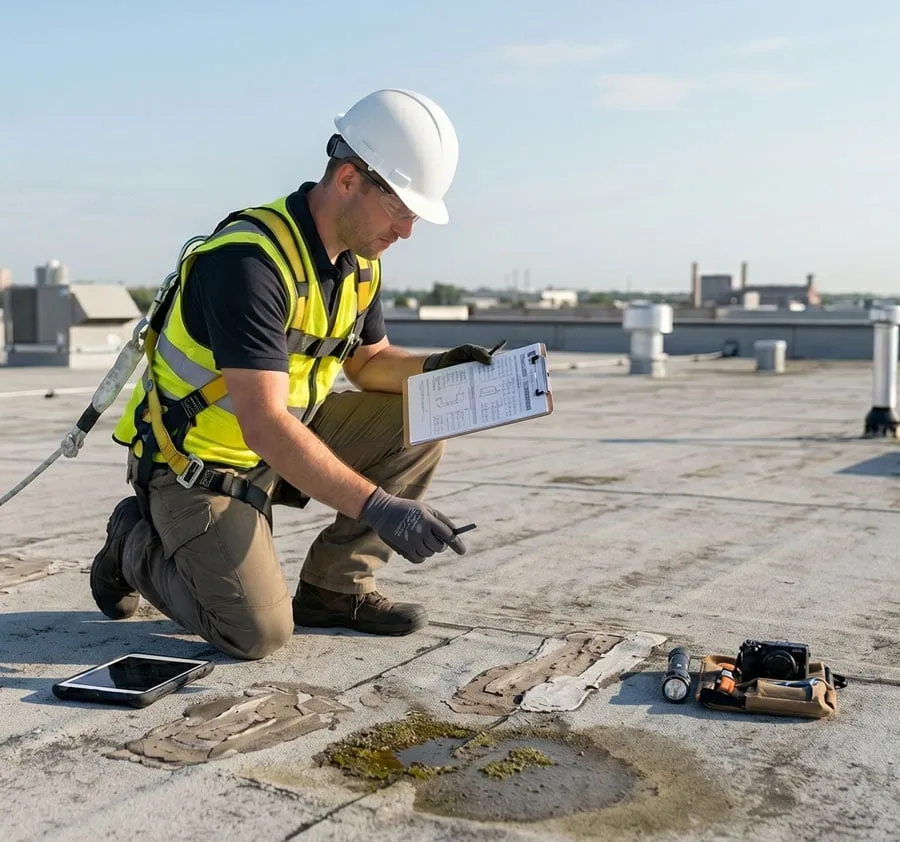
KEE is not a coating, nor does its name alone establish a warranty, thickness, or performance outcome. The specified assembly still depends on deck, insulation, attachment, perimeter securement, penetrations, and drainage. We separate what can be seen from what needs testing and explain any limits in the survey. A roof condition inspection can establish a usable record before material options are priced.

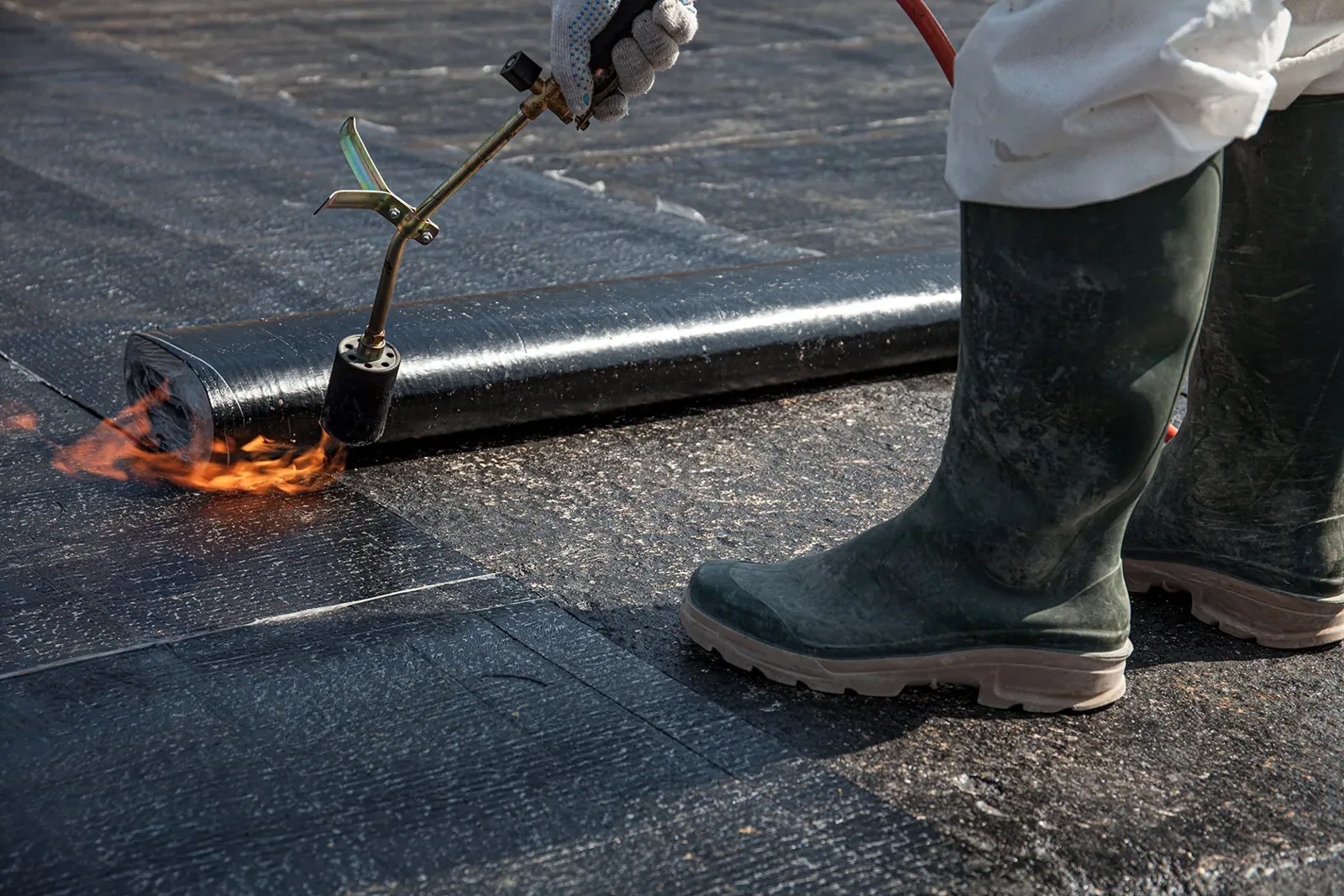
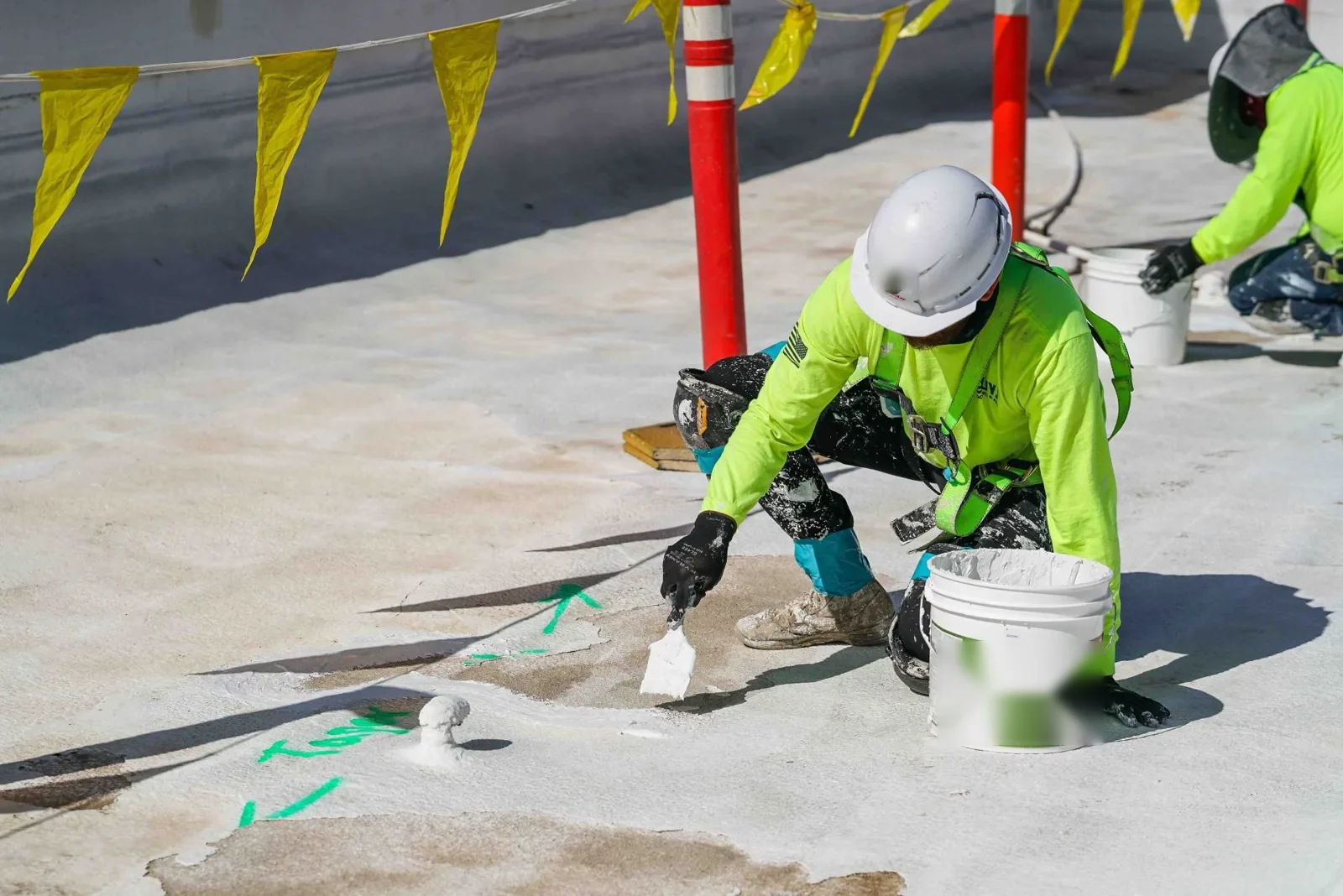
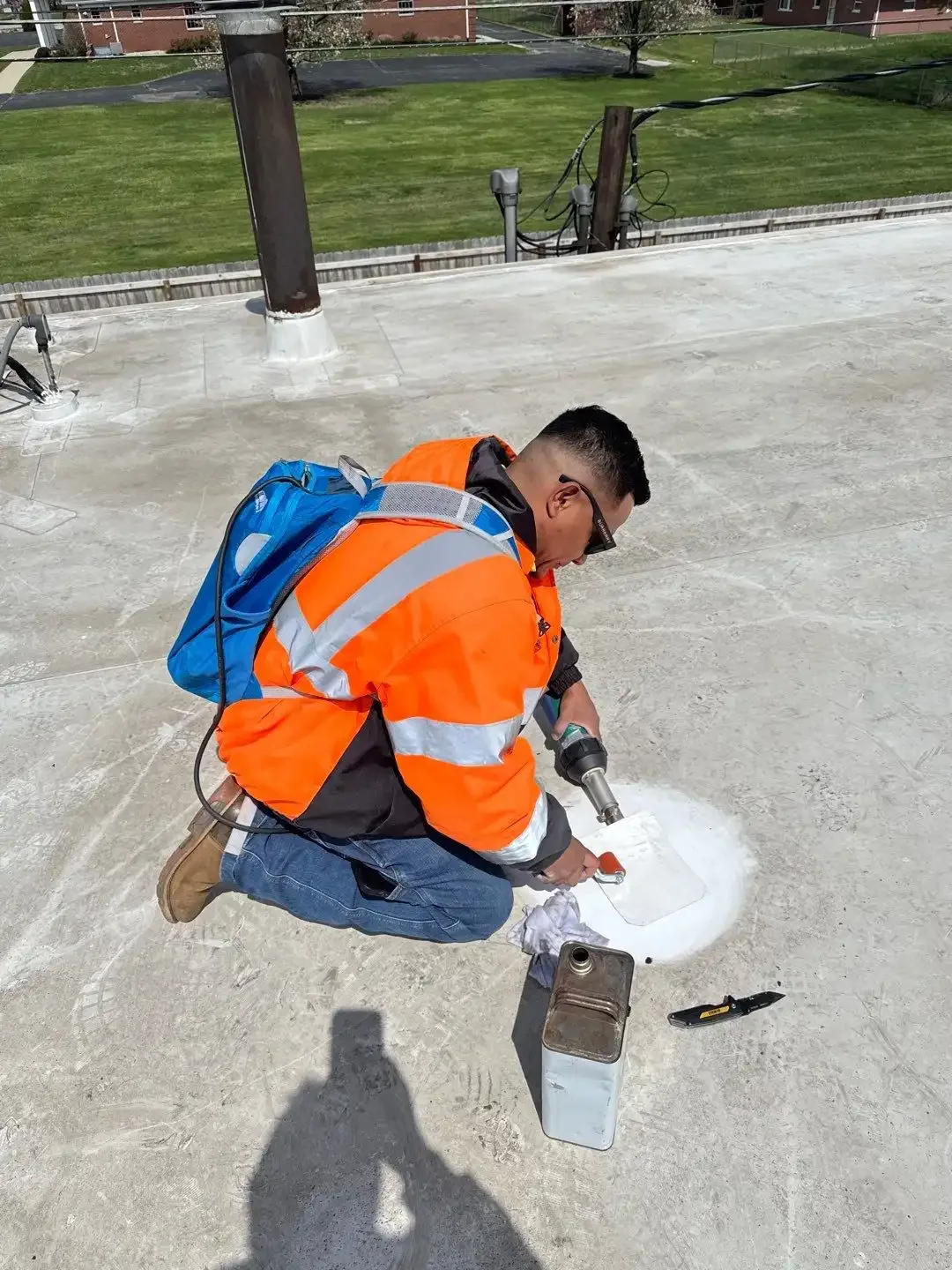
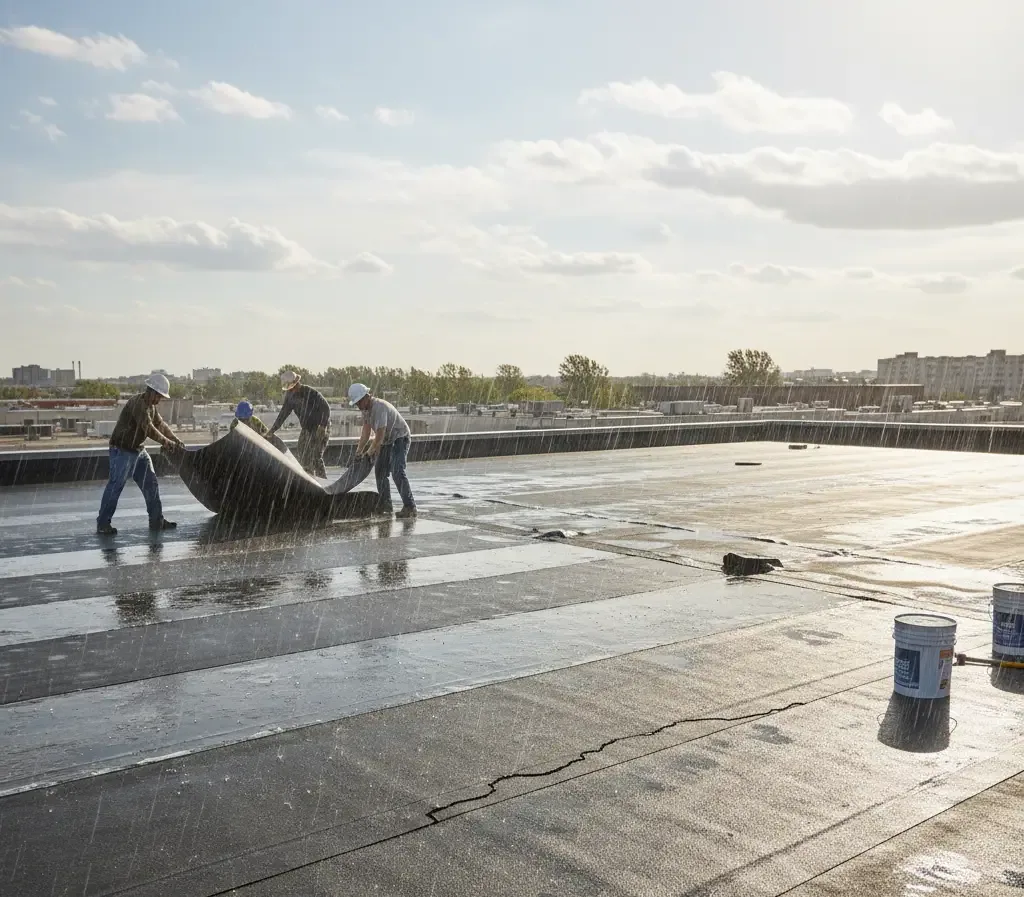
Hot-air welds need a clean compatible surface and settings matched to the sheet. We test a sample area when product instructions and conditions allow, then inspect the completed seam. A repair that crosses contamination or changes level at a transition needs its own detail instead of a generic lap patch.

Check Welds and Flashing

Many KEE systems use heat-welded seams. The detail must be clean and compatible, and the welding setup has to suit the specified sheet and conditions. We check test seams, lap continuity, and terminations rather than assuming a straight line is a sound bond. Repair work may require carefully prepared surfaces and accessories that match the system's technical requirements. The repair record should identify areas tested, materials used, and any limits encountered.

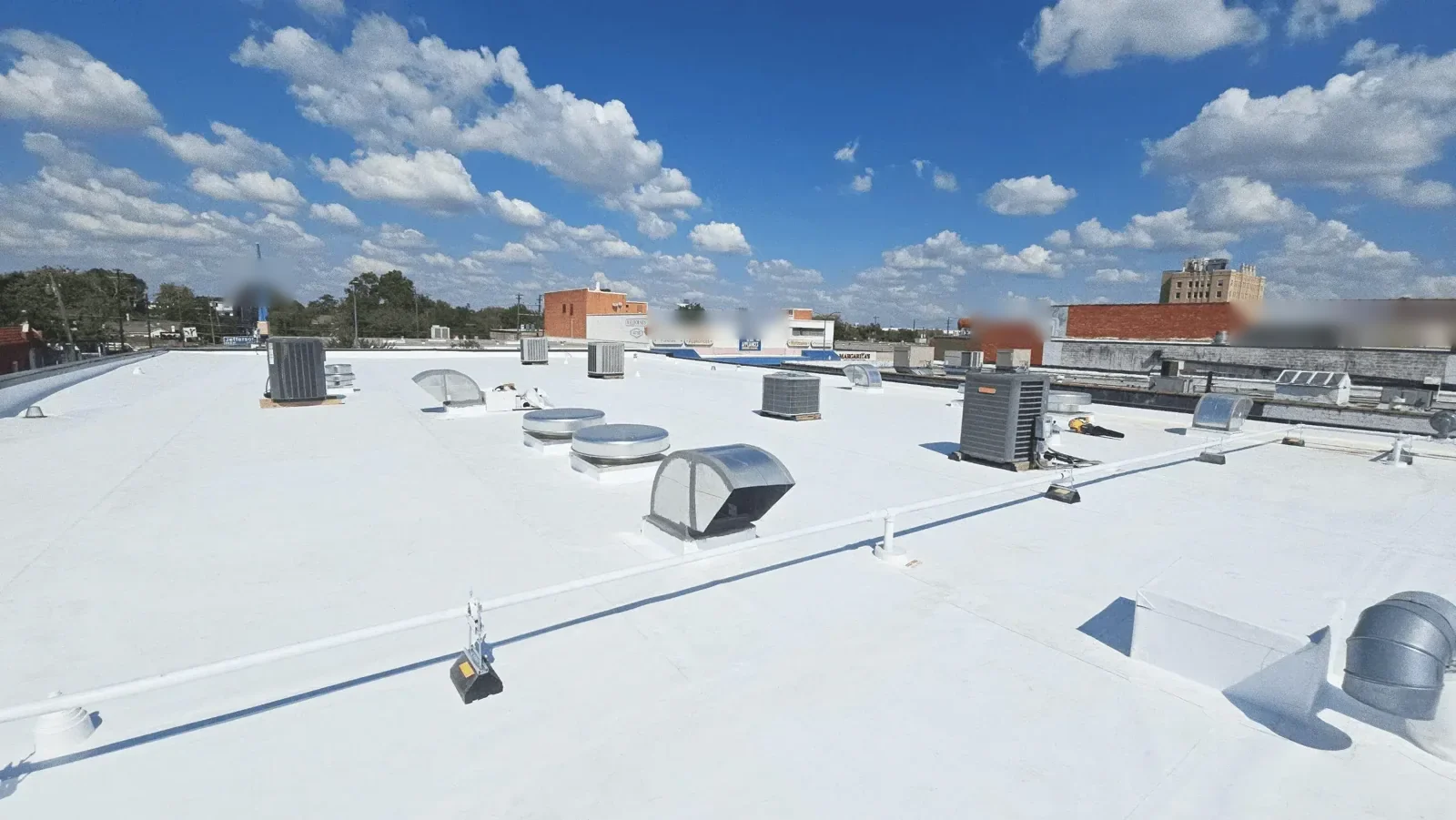
Penetrations and perimeter details take more attention than the open field. Curbs, vents, pipes, drains, parapets, and edges interrupt the membrane and can move differently from the deck. We inspect the transition geometry, securement, and nearby sheet for stress or water entry. If the flashing is loose because the underlying curb has shifted or deteriorated, replacing the membrane alone will not correct it. We state whether the proposal repairs a membrane detail or includes carpentry, equipment, or drainage work by another trade.

Set the Assembly Requirements

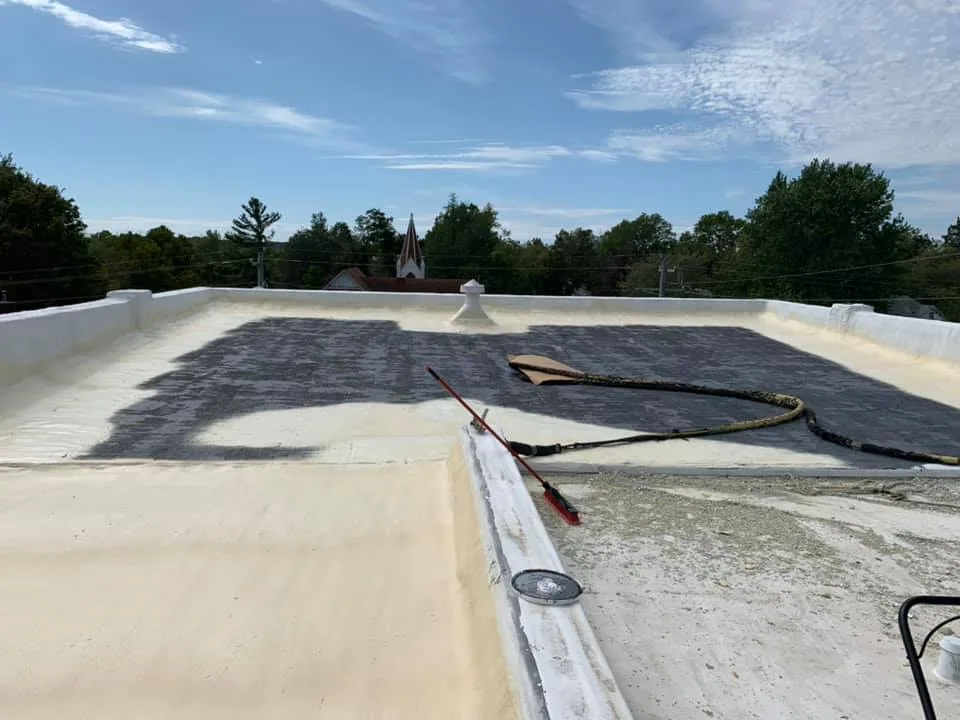
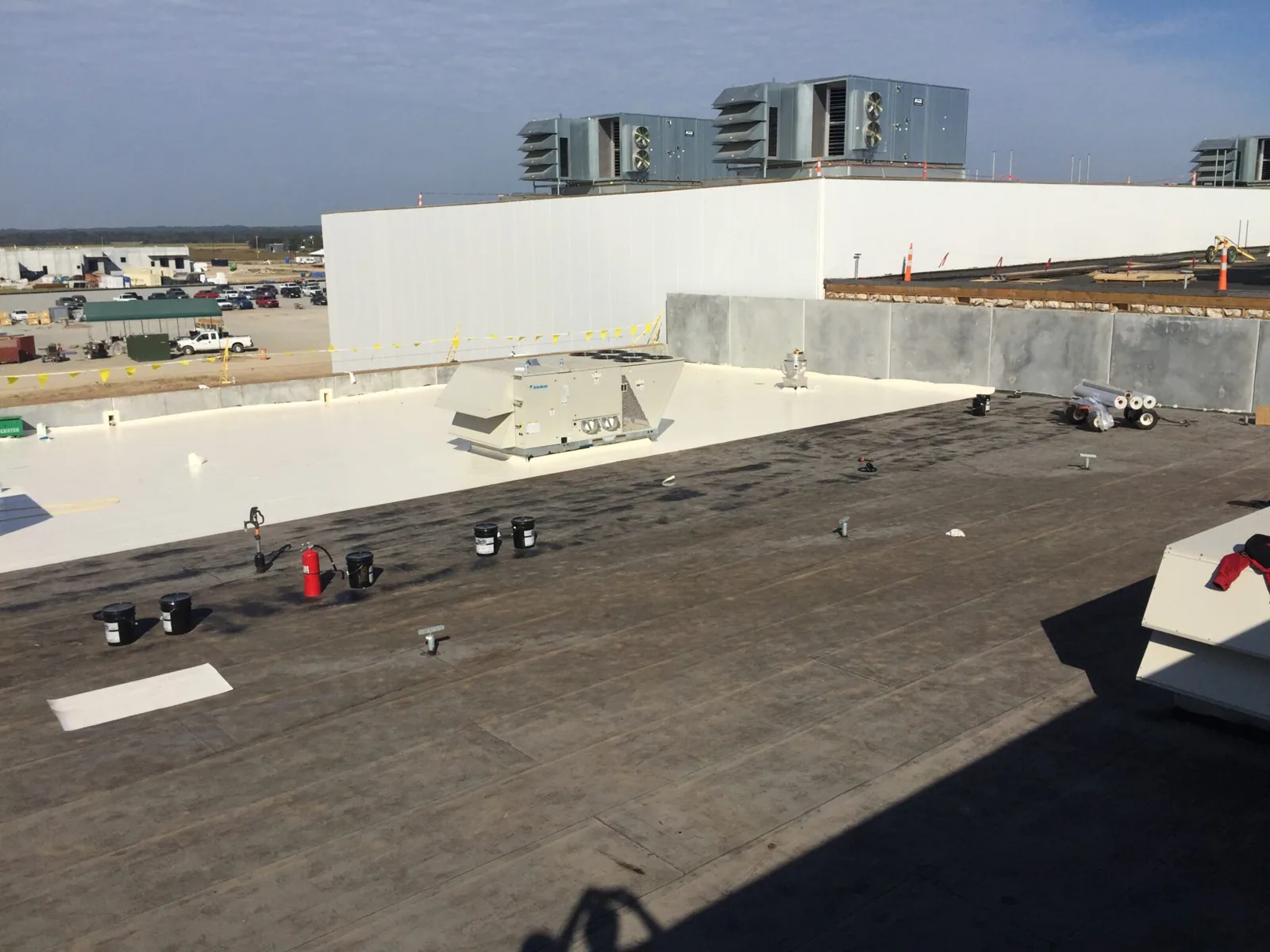
A KEE roof should be evaluated as a complete assembly. Insulation, cover board, attachment, vapor conditions where relevant, deck capacity, and edge design all affect how the membrane performs. We also inspect the number and condition of existing layers before considering recover. Wet insulation, weak attachment, or a damaged deck can make removal the better way to establish a sound substrate. Where a recover remains plausible, the estimate states what testing and code review are still needed.

Before KEE is specified, the GC and design team should document the building-code and energy criteria governing the planned assembly. We compare KEE with a PVC membrane or TPO system through specified properties, building use, and repair needs. A cover board and insulation scope should be included when the survey finds concerns below the sheet.

Keep Work Within a Reliable Window

Cold can affect sheet handling and heat welding, while summer heat changes surface and work conditions. We follow product temperature, substrate, and preparation limits, and keep tear-off small enough to protect within the planned shift. If conditions change, the sequence states how an open edge or tie-in will be secured.

Ammon’s business areas include retail, medical, research, communications, and technology uses, each with different access and occupancy needs. Before mobilization, we confirm staging, HVAC coordination, deliveries, restricted areas, and shutdown approvals. Downtown Idaho Falls has a distinct commercial core, while the Northgate Mile area includes business districts and redevelopment nodes. A phased work plan should fit the building calendar.

Decide When a Local Repair Is Enough

An isolated puncture or separated seam can be a reasonable repair when the surrounding sheet is sound and the material match is known. Multiple recurring failures, broad shrinkage, wet insulation, or deteriorated transitions point to a wider condition. We map representative defects and note whether they share a cause, such as drainage, movement, or repeated trade access. That makes repair scope more useful than a count of patches alone.

Idaho Falls averages its highest monthly precipitation in May. Drains and overflow paths therefore belong in a membrane review, especially where ponding repeats. We inspect the field slope and outlets, then separate membrane work from corrections to drain bowls or piping. If standing water recurs, drain and scupper repairs may need to accompany the membrane scope. A replacement plan can be compared with staged repairs using the same documented findings.

Leave a Clear Roof Record

Closeout records connect each repair area to its material and detail. We note seam checks, flashing transitions, drain work, and unresolved access or substrate issues. Photos help distinguish completed work from a location needing another inspection. Keep system data and repair history available before mechanical work so a new penetration does not compromise the membrane.

Routine maintenance can revisit welds, terminations, perimeter edges, drains, and equipment. When surface signs point below the membrane, a moisture survey or selective opening checks insulation before the repair scope is set. A maintenance visit can log developing conditions and prioritize water control, repair, and planned capital work. The next budget review then has a record tied to roof locations rather than general impressions.

Questions About KEE Roofing

We check available submittals, product labels, repair records, and the membrane characteristics visible during the inspection. If identity remains uncertain, we do not assume a new material will bond. The scope can include a sample or a manufacturer-supported identification step before permanent repair is priced.

The exact formulation, reinforcement, surface condition, and repair detail control compatibility. We confirm the installed product and follow the applicable technical instructions. If the surrounding sheet is contaminated or too degraded for a dependable connection, a larger replacement detail may be required.

Poor preparation, contamination, incorrect heat settings, movement, or water entry at a transition can all contribute. We inspect the whole seam area and nearby flashing to see whether the opening is isolated or part of a larger pattern. The repair record should identify the cause that was observed and what remains uncertain.

No membrane label settles that decision by itself. We compare use, deck, attachment, insulation, perimeter design, drainage, project criteria, and future maintenance. A specification review may show that a different single-ply or multi-ply assembly better fits the property and work conditions.

Temperature and surface conditions affect handling and welding, while winter access can limit safe exposure. We follow the product requirements, check the current forecast and actual roof, and keep each open work zone within a reliable dry-in plan.

ServicesRoof SystemsIndustriesProperty TypesService AreasDamage RepairCapabilitiesManufacturersContactAboutRequest a Roof Assessment555-555-5555
Call us today555-555-5555